
Why Organizations Lose Revenue Across Disconnected Systems: The Shocking Truth
May 15, 2026
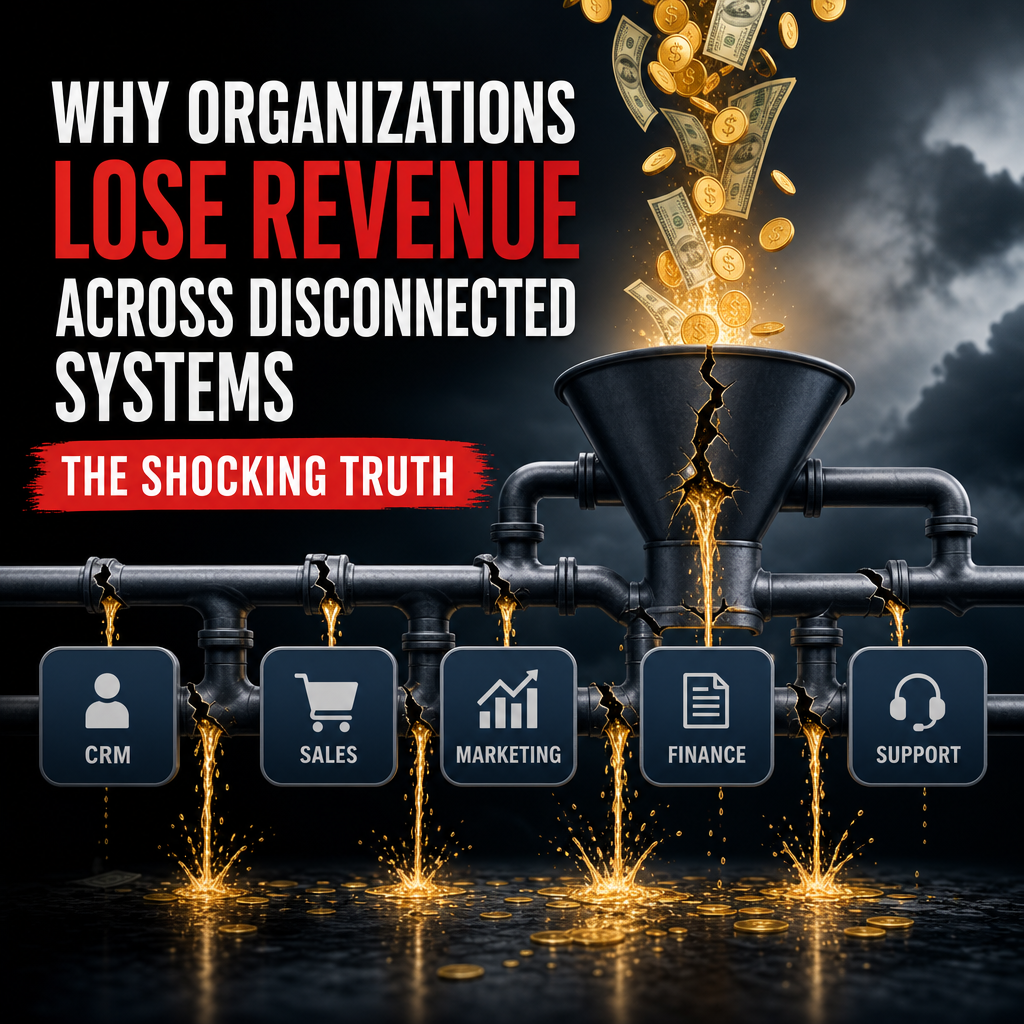
Why organizations lose revenue across disconnected systems is a critical issue that many businesses overlook until the financial impact becomes difficult to ignore. In today’s fast-paced digital economy, companies rely on a myriad of software and applications to run various functions, from sales and marketing to inventory and customer service. However, when these systems operate in silos without proper integration or communication, the resulting inefficiencies can cause revenue to slip through the cracks.
The Hidden Cost of Disconnected Systems
Disconnected systems create barriers that disrupt business processes and slow down decision-making. For example, if the sales team uses one platform to track leads while the marketing team uses another to manage campaigns, inconsistencies in data can occur. This fragmentation results in lost opportunities because leads may be mishandled, follow-ups delayed, or customer information duplicated.
Another major problem is inaccurate or incomplete reporting. Organizations depend on data to forecast demand, monitor sales performance, and gauge customer satisfaction. When systems don’t synchronize, reports often reflect outdated or conflicting information, impairing executive decisions and strategic planning. This can lead to misallocation of resources, missed sales targets, and ultimately, diminished revenue.
How Operational Inefficiencies Lead to Revenue Loss
When data flows freely between integrated systems, businesses can automate workflows, reduce manual tasks, and improve accuracy. Conversely, disconnected systems force employees to perform repetitive data entry or reconcile discrepancies manually. This not only wastes valuable time but also increases the likelihood of human error.
Manual processes can cause delays in order processing, invoicing, or supply chain management. Imagine a retailer whose inventory system doesn’t communicate with the e-commerce platform. A product might be listed as available online when, in fact, it’s out of stock in the warehouse. Customers then face frustration from canceled orders or delayed shipments, which erodes trust and reduces repeat purchases.
Customer Experience Suffers When Systems Are Disconnected
Customer retention directly impacts revenue streams, yet disconnected systems often produce fragmented customer profiles. Sales reps may not have access to the full history of interactions or purchases, limiting their ability to provide personalized service. Marketing efforts, too, can become inefficient when campaigns are not informed by complete customer data.
Moreover, support teams relying on separate ticketing or feedback platforms might struggle to resolve issues promptly if information is scattered across silos. This poor customer experience results in higher churn rates, negative word-of-mouth, and loss of customer lifetime value—a significant revenue blow that could have been avoided through better integration.
Financial Reporting and Compliance Risks
Disconnected financial systems can be particularly damaging. Without real-time reconciliation between accounts payable, receivable, and general ledger systems, companies may misreport revenue or expenses. This increases audit risks and can lead to penalties or loss of stakeholder confidence, which can be detrimental to revenue growth.
In addition, the lack of transparency makes it difficult to identify uncollected payments, missed billing opportunities, or fraudulent activities. When financial data isn’t accurate or timely, cash flow suffers and strategic decision-making becomes riskier.
The Solution: Unified Systems and Integration Strategies
To combat these challenges, organizations must prioritize the integration of their business systems. This includes adopting unified platforms or middleware that enables communication across diverse applications. By creating a seamless flow of data, companies can improve operational efficiency, enhance customer insights, and gain real-time visibility into performance metrics.
Investing in integration is not merely a technical upgrade but a strategic imperative. It requires cross-functional collaboration, clear data governance policies, and a focus on user experience. With connected systems, organizations can automate routine processes, reduce errors, and increase agility—ultimately optimizing revenue potential.
Conclusion
Why organizations lose revenue across disconnected systems boils down to inefficiencies, errors, and missed opportunities caused by fragmented data and poor communication between business platforms. The consequences touch every aspect of the company—from operational workflows and customer experience to financial accuracy and compliance. By recognizing the risks of disconnected systems and committing to integration, businesses can safeguard revenue streams, improve decision-making, and foster sustainable growth in a competitive marketplace.