
What Does a vCISO Actually Do? Exclusive Insights You Need
May 15, 2026
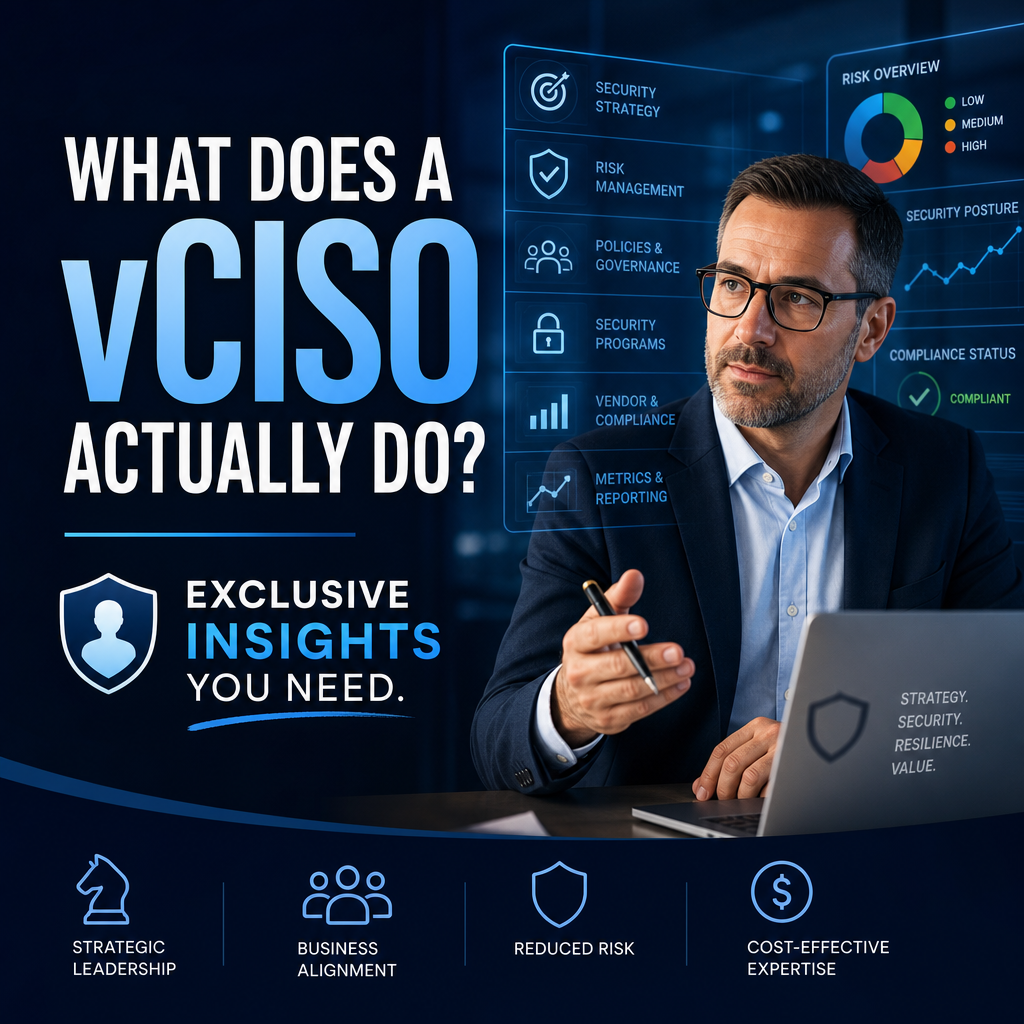
What does a vCISO actually do? This question has become increasingly relevant as businesses seek flexible, cost-effective solutions to manage cybersecurity risks without the expense of a full-time Chief Information Security Officer (CISO). A virtual CISO, or vCISO, plays a crucial role in guiding an organization’s security strategy, compliance, and risk management—offering top-tier expertise on an as-needed basis. Understanding the scope and impact of a vCISO’s work can help businesses make informed decisions about strengthening their security posture.
The Role of a vCISO: Strategic Leadership Without the Full-Time Cost
At its core, a vCISO provides strategic leadership in cybersecurity, much like a traditional CISO, but operates as an outsourced or part-time resource. This arrangement benefits organizations, especially small to medium-sized companies, that may lack the budget or need for a permanent executive but still require expert guidance on security matters.
The vCISO’s responsibilities typically include developing and maintaining a comprehensive cybersecurity program tailored to the organization’s size, industry, and risk profile. This involves assessing current security practices, identifying vulnerabilities, and defining policies and procedures to mitigate risks. Importantly, a vCISO aligns cybersecurity initiatives with business goals, ensuring security supports rather than hinders growth and innovation.
What Does a vCISO Actually Do? Key Responsibilities Explained
Conducting Risk Assessments and Security Audits
One of the primary tasks a vCISO undertakes is conducting detailed risk assessments. By evaluating an organization’s digital assets, data flows, and potential threats, the vCISO identifies gaps and weaknesses that could expose the business to cyberattacks. This process often includes reviewing physical security controls, network defenses, endpoint security, and employee awareness.
Security audits—whether internal or to meet external regulatory requirements—also fall under the vCISO’s purview. These audits help ensure compliance with standards such as GDPR, HIPAA, PCI-DSS, or industry-specific regulations, depending on the company’s sector.
Developing and Enforcing Security Policies
A vCISO crafts security policies that set clear expectations and define acceptable use of technology resources across the company. These policies address issues like data privacy, incident response, access controls, and employee training. The vCISO also leads awareness programs to improve the security culture among staff, reducing risks associated with human error.
Incident Response and Crisis Management
When a security breach occurs, a vCISO provides expert counsel on managing the situation swiftly and effectively. This includes leading or advising the incident response team, coordinating communication to stakeholders, and ensuring root causes are addressed to prevent future incidents. Having a vCISO on call can significantly reduce downtime and damage during security crises.
Vendor and Third-Party Risk Management
In today’s interconnected business environment, third-party vendors often have access to critical systems and data. The vCISO evaluates these relationships to ensure that partners adhere to security standards and don’t introduce undue risks. This responsibility may include establishing contractual security requirements and monitoring vendor compliance over time.
Advising on Technology and Investment Decisions
A vCISO keeps abreast of the latest cybersecurity technologies and trends, enabling the organization to make informed investments in security tools and infrastructure. Whether it’s implementing next-generation firewalls, deploying endpoint detection systems, or adopting cloud security solutions, the vCISO ensures that technology choices align with risk assessments and budget realities.
The Benefits of Hiring a vCISO
Engaging a vCISO allows organizations to access senior-level cybersecurity leadership without the overhead of a full-time executive. This flexibility means scalable support that can evolve alongside the company’s needs. Additionally, a vCISO often brings experience from multiple industries, offering diverse insights and best practices.
Many businesses also appreciate the objective perspective a vCISO provides, often identifying blind spots that internal teams may overlook. This external viewpoint, combined with strategic planning, can strengthen a company’s defenses and support regulatory compliance efforts.
How to Maximize the Value of a vCISO Partnership
To get the most out of a vCISO engagement, it’s important for organizations to clearly define expectations and establish open communication channels. The vCISO should be integrated into key business discussions to ensure security remains a foundational element rather than an afterthought.
Regular reporting and progress reviews help both parties track improvements and adjust priorities as the threat landscape changes. Companies should also view the vCISO as a trusted advisor and collaborator, leveraging their expertise to foster a proactive security culture.
—
In summary, what does a vCISO actually do? They serve as a strategic cybersecurity leader, risk manager, policy developer, incident response coordinator, and trusted advisor—all on a flexible basis tailored to an organization’s unique needs. This model offers a practical, expert-driven approach to managing modern cybersecurity challenges, helping businesses protect their most valuable digital assets in an ever-evolving threat environment.