
Telecommunications Revenue Leakage: Top Challenges and Must-Have Solutions
August 13, 2026
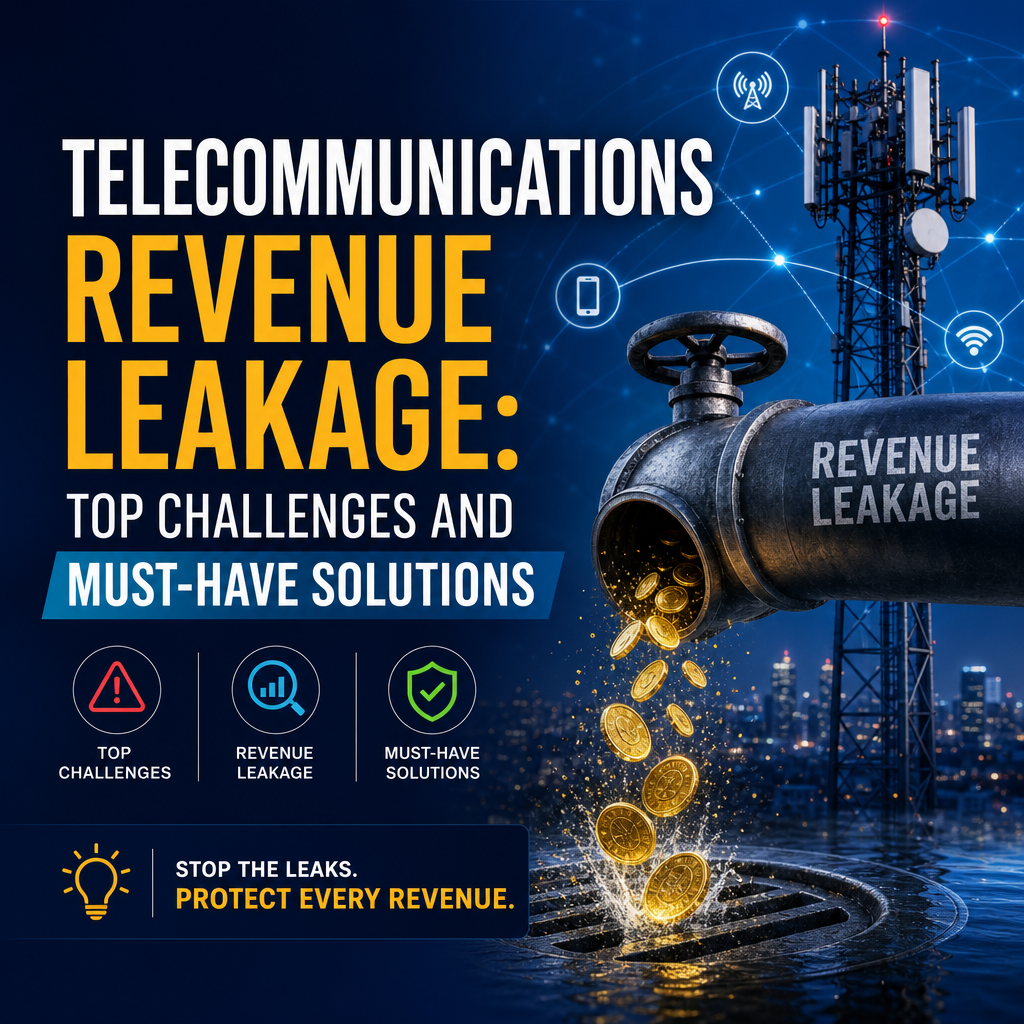
Telecommunications revenue leakage poses a significant challenge for service providers striving to maintain profitability in an increasingly competitive market. Revenue leakage refers to the loss of expected income due to errors, inefficiencies, fraud, or system flaws throughout the billing and revenue assurance processes. For telecommunications companies, understanding the root causes and implementing robust solutions is critical to safeguarding revenue streams and ensuring sustainable growth.
Understanding Telecommunications Revenue Leakage
Revenue leakage occurs when there is a discrepancy between services rendered and revenues collected. In telecommunications, this may be caused by multiple factors, such as inaccurate billing systems, data inconsistencies, fraud, or poor process management. This leakage can amount to millions of dollars annually, directly impacting a company’s bottom line. Therefore, identifying the sources of leakage and addressing them proactively is essential to optimizing financial performance.
Top Challenges Leading to Telecommunications Revenue Leakage
1. Complex Billing Systems and Rate Plans
Telecommunication providers often offer a wide array of products and services, each with varying pricing models and promotions. Complex billing systems struggle to handle intricate rate plans or promotions correctly, resulting in missed charges or incorrect discounts. Moreover, manual interventions in billing increase the chances of human error, further exacerbating revenue leakage.
2. Data Integrity Issues
Revenue depends heavily on accurate data from multiple sources, including call detail records, customer databases, and usage logs. Telecommunications companies routinely face challenges with data discrepancies, duplication, or missing information. Poor data integrity can lead to under-billing, over-billing, or outright revenue loss when the company fails to capture all chargeable usage.
3. Fraud and Subscription Abuse
Fraud in telecommunications includes identity theft, subscription fraud, and unauthorized usage, such as SIM box fraud or roaming fraud. Fraudulent activities lead to uncollected revenues and increased operational costs. Staying ahead of sophisticated fraud schemes requires continual investment in fraud detection and prevention mechanisms.
4. Inefficient Revenue Assurance Processes
Many service providers suffer from inadequate revenue assurance frameworks. Insufficient monitoring and lack of automation in revenue assurance processes hinder early detection of revenue leaks. Without timely insights and corrective actions, revenue leakage becomes a persistent drain on resources and revenue.
5. Integration and System Interoperability Issues
Telecommunication ecosystems often involve multiple vendors, third-party platforms, and legacy systems. Lack of seamless integration and interoperability can lead to errors in service provisioning, rating, or billing, causing revenue discrepancies. Fragmented IT environments complicate reconciliation efforts and make it difficult to pinpoint leakage sources.
Must-Have Solutions to Combat Telecommunications Revenue Leakage
Robust Billing and Charging Systems
Investing in advanced, flexible billing platforms capable of managing complex rate plans and promotions is crucial. Automation reduces manual errors and improves billing accuracy, ensuring that all billable services are accurately captured and correctly invoiced. Real-time charging systems also help in minimizing delays and enabling immediate revenue recognition.
Data Quality Management and Analytics
Implementing stringent data governance protocols and utilizing data analytics tools can significantly enhance data integrity. Automated validation and reconciliation routines help detect anomalies and inconsistencies early in the revenue cycle. Analytics platforms can provide actionable insights to identify patterns leading to revenue leakage, enabling proactive measures.
Advanced Fraud Management Solutions
Telecommunication companies must deploy sophisticated fraud detection systems that leverage machine learning and AI to identify and prevent fraud incidents in real time. Continuous monitoring of usage patterns, subscriber behavior, and network traffic helps mitigate revenue loss due to fraudulent activities. Collaboration with industry consortia to share intelligence on emerging threats is also beneficial.
Comprehensive Revenue Assurance Frameworks
A well-structured revenue assurance program that encompasses end-to-end monitoring—from service activation to billing and collections—provides the best defense against revenue leakage. Automating reconciliation processes and establishing clear accountability within teams ensures quicker identification and resolution of issues. Regular audits and controls further enhance financial integrity.
Systems Integration and Process Optimization
Improving integration among disparate systems reduces errors caused by data silos and manual interventions. Adopting interoperable platforms and APIs helps achieve streamlined workflows and seamless exchanges of accurate data across the revenue chain. Additionally, process optimization initiatives focusing on simplification and automation yield higher operational efficiency and reduced leakage risk.
Conclusion
Telecommunications revenue leakage remains a critical challenge fueled by the complexity of services, data issues, fraud, and system inefficiencies. However, by understanding the top causes and deploying must-have solutions—such as robust billing systems, data validation, fraud management, revenue assurance, and enhanced integration—telecom operators can effectively plug revenue gaps. Proactive management and continuous improvement in these areas ensure that telecommunications companies maximize profitability while delivering high-quality services to their customers.