
System Silos: Uncover Hidden Operational Risks and Avoid Costly Mistakes
June 7, 2026
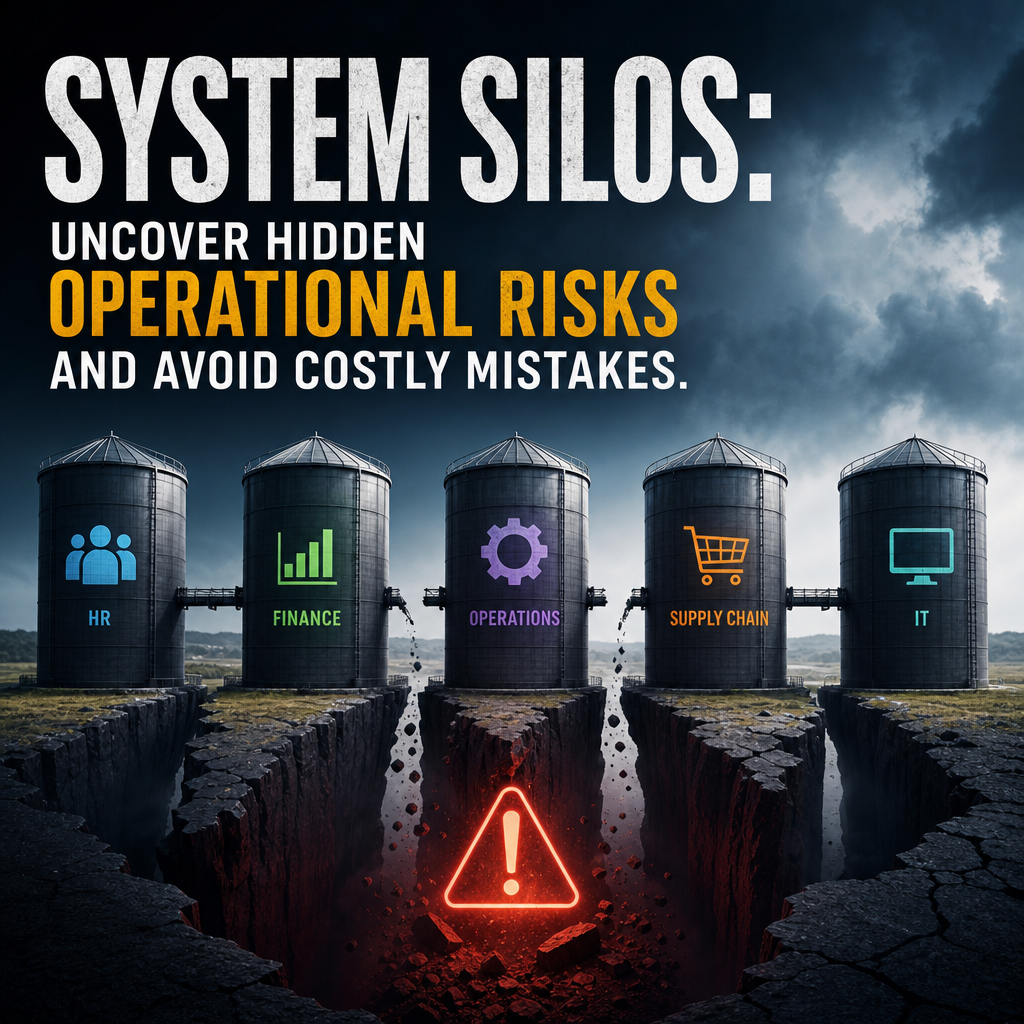
System silos present a significant challenge for many organizations, often leading to hidden operational risks that can disrupt workflows, reduce efficiency, and incur costly mistakes. Understanding what system silos are and how they affect your operations is crucial to mitigating these risks and fostering a more collaborative, streamlined environment.
What Are System Silos and Why Do They Matter?
System silos occur when different departments or teams within an organization use isolated software systems that don’t communicate effectively with one another. These separated systems can include databases, customer relationship management (CRM) tools, inventory management software, and other operational platforms. Though each system may function well individually, the lack of integration hinders the seamless flow of information across departments.
The impact of system silos is not just about inconvenience; it’s about the very real operational risk they introduce. When critical data is trapped in one system and inaccessible to others, decision-making suffers. Employees may work with outdated or incomplete information, leading to errors, delays, and misaligned objectives.
How System Silos Increase Operational Risk
The fragmented nature of system silos creates vulnerabilities that can ripple across an organization’s operations:
– Data Inconsistencies: When multiple systems hold overlapping data but lack synchronization, conflicting information emerges. This makes it difficult for teams to trust the data they rely on, increasing the chance of incorrect decisions.
– Reduced Visibility: Management and leadership may lack a full, real-time view of organizational performance due to disconnected systems. This limited visibility obstructs timely interventions and risk mitigation.
– Inefficiency and Redundancy: Employees often resort to manual data entry or workarounds to bridge system gaps, wasting time and introducing human error that complicates workflows.
– Delayed Response Times: Critical alerts, such as supply chain disruptions or compliance concerns, may not be promptly communicated across systems, delaying the necessary response.
– Compliance and Security Risks: Silos can result in inconsistent application of policies and controls, raising the likelihood of regulatory breaches or security lapses.
Identifying Hidden Operational Risks Through System Silos
Uncovering these operational risks requires a thorough examination of your systems landscape and workflow processes. Some key indicators of system silos contributing to hidden risk include:
– Frequent discrepancies in reports generated from different systems
– Repetitive data entry across platforms causing errors
– Slow turnaround times caused by handoffs between disconnected departments
– Employee frustration or workarounds signaling process inefficiencies
– Missed deadlines or compliance incidents linked to incomplete information flow
Regular audits of data quality, communication protocols, and system integration points help reveal these hidden risks before they escalate.
Strategies to Avoid Costly Mistakes from System Silos
Proactively addressing system silos is essential to minimizing operational risk and avoiding financial losses. Effective strategies include:
– Implementing Integrated Systems: Adopting enterprise resource planning (ERP) or other unified platforms can merge disparate data sources, facilitating real-time information sharing.
– Investing in Middleware Solutions: Where total system replacement isn’t feasible, middleware tools can bridge existing software, enabling smoother data exchange.
– Standardizing Data Formats and Protocols: Establishing uniform data standards reduces inconsistencies and eases integration challenges.
– Encouraging Cross-Department Collaboration: Promoting communication between teams helps identify system redundancies and fosters alignment on workflows.
– Continuous Monitoring and Feedback Loops: Implementing dashboards and alerting mechanisms ensures visibility into operational metrics and early detection of anomalies.
– Training and Change Management: Equipping employees with knowledge and support to adapt to integrated systems minimizes resistance and mistakes.
The Bottom Line: Breaking Down System Silos for a Safer Operation
Addressing system silos is more than a technology upgrade; it’s a strategic imperative to reduce operational risk and improve organizational agility. When businesses break down these barriers, they gain clearer insights, faster decision-making, and a unified approach to risk management.
Avoiding costly mistakes caused by hidden risks within siloed systems means embracing integration, fostering transparency, and continuously refining operational processes. In doing so, organizations set themselves on a path toward greater efficiency, resilience, and long-term success.