
Revenue Leakage: 7 Stunning Hidden Causes of Enterprise Fraud
June 23, 2026
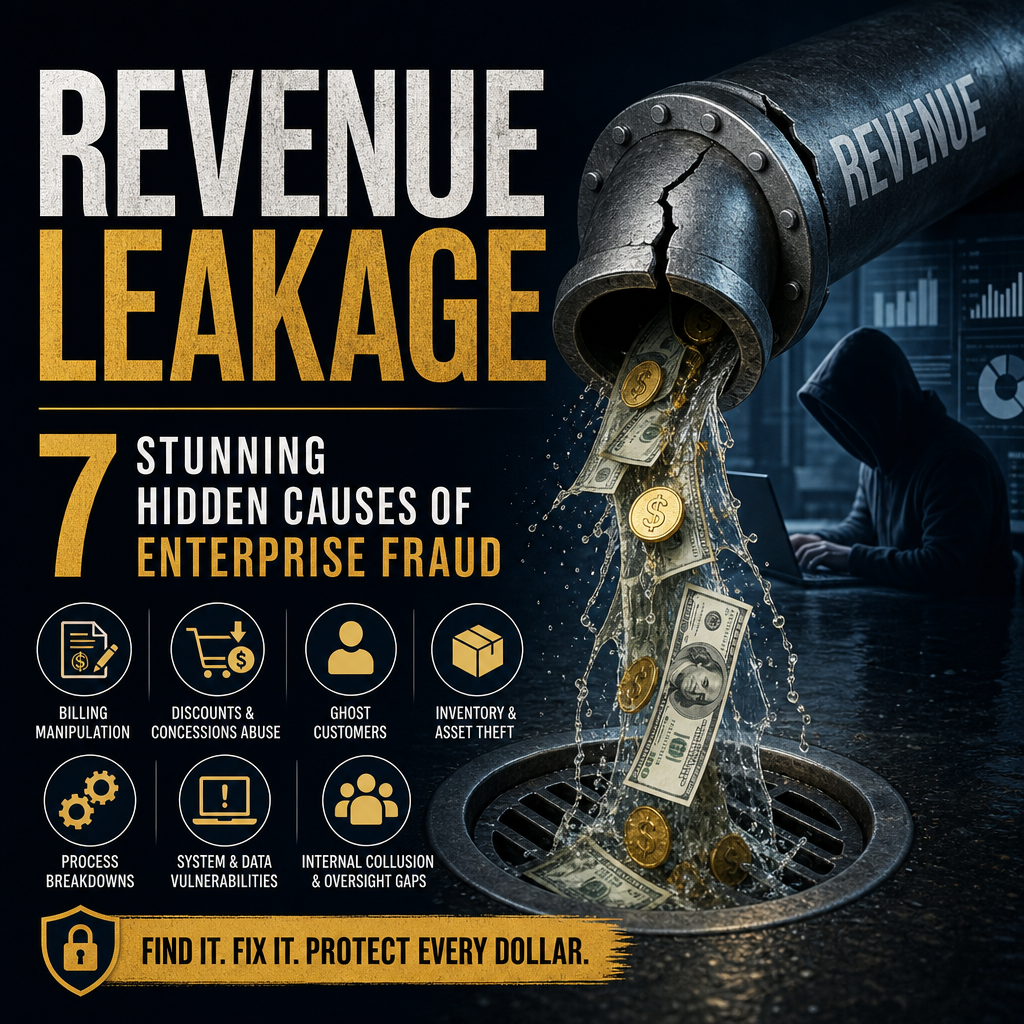
Revenue leakage is a silent threat that many companies face, but few fully understand in its complexity. When discussing enterprise fraud, the phrase “revenue leakage” often comes up as a direct consequence, where small unnoticed losses accumulate into significant financial damage over time. Understanding the hidden causes behind these losses is crucial for businesses aiming to protect their bottom line and maintain operational integrity. Let’s delve into seven stunning hidden causes of enterprise fraud that can lead to revenue leakage and explore how organizations can guard against them.
1. Inefficient Billing and Invoicing Processes
One of the most overlooked causes of revenue leakage stems from errors or inefficiencies in billing and invoicing. Incorrect pricing, outdated rate cards, missed billing cycles, or manual errors can all result in money slipping through the cracks. For example, failure to bill for all delivered services or goods means companies never receive payment for what they provided, effectively causing revenue leakage.
Automating billing processes, regularly auditing invoices, and integrating billing systems with inventory and CRM data can help minimize these mistakes and reduce the risk of fraud concealed within billing errors.
2. Unauthorized Discounts and Price Manipulation
In many enterprises, sales teams or managers might offer discounts or rebates without proper authorization, sometimes intentionally to win deals or, unfortunately, as a form of collusion with customers. This unauthorized price manipulation erodes profitability and creates a loophole for enterprise fraud.
Implementing strict approval workflows and using real-time pricing tools ensures that discounts are monitored and approved by the right authorities, preventing hidden revenue losses.
3. Weak Internal Controls and Segregation of Duties
Internal controls are the backbone of fraud prevention. When there is a lack of segregation of duties—such as one person handling both sales and accounts receivable functions—it creates an environment ripe for enterprise fraud. Employees can manipulate records, divert funds, or create fake transactions leading to revenue leakage going unnoticed for long periods.
Strong internal control frameworks, regular staff audits, and rotating job responsibilities are critical steps to mitigate such risks.
4. Contract and Pricing Non-Compliance
Complex contracts with varied pricing terms, volume discounts, or service-level agreements can sometimes be misinterpreted or ignored, resulting in incorrect charges to customers. Non-compliance with agreed terms might be unintentional or could be exploited by employees or even clients to avoid paying the full amount.
Routine contract reviews, automated compliance checks, and training for sales and billing personnel on contract terms reduce these vulnerabilities.
5. Data Inconsistencies and System Integration Failures
When various enterprise systems such as CRM, ERP, inventory, and finance are not fully integrated, discrepancies can arise causing data inconsistencies. For instance, a product shipped but not reflected in the finance system won’t be invoiced, creating revenue leakage. Enterprise fraud can flourish in such environments where data mismatches are not promptly detected.
Ensuring end-to-end visibility through integrated platforms and regular data reconciliation processes can close this gap.
6. Return and Refund Fraud
Returns and refunds are a necessary part of commerce but can be exploited when employees or customers manipulate policies. Fake returns, overstated refunds, or processing returns without proper checks are examples of fraud that cause revenue leakage.
Introducing strict return authorizations, audit trails for refunds, and analyzing unusual refund patterns help curb this threat.
7. Unauthorized Use of Company Assets or Services
Employees or third parties may use company assets or services for personal gain—such as unauthorized use of discounts, complimentary services, or even stealing inventory. This misuse can be subtle yet contributes significantly to revenue leakage over time.
Regular asset audits, surveillance mechanisms, and clear policies regarding usage can deter such fraud and protect enterprise revenue.
—
Recognizing and addressing these hidden causes of revenue leakage tied to enterprise fraud calls for a multi-layered approach. Proactive detection through advanced analytics, employee training on ethical practices, and robust fraud risk assessments are equally essential. Ultimately, fostering a culture of transparency and accountability combined with modern technology solutions empowers businesses to plug revenue leaks and safeguard their financial health. Ignoring these subtle but impactful causes may not only damage profitability but also erode trust within and outside the organization.