
Real-Time Monitoring: The Must-Have Business Intelligence for Effortless Operations
June 13, 2026
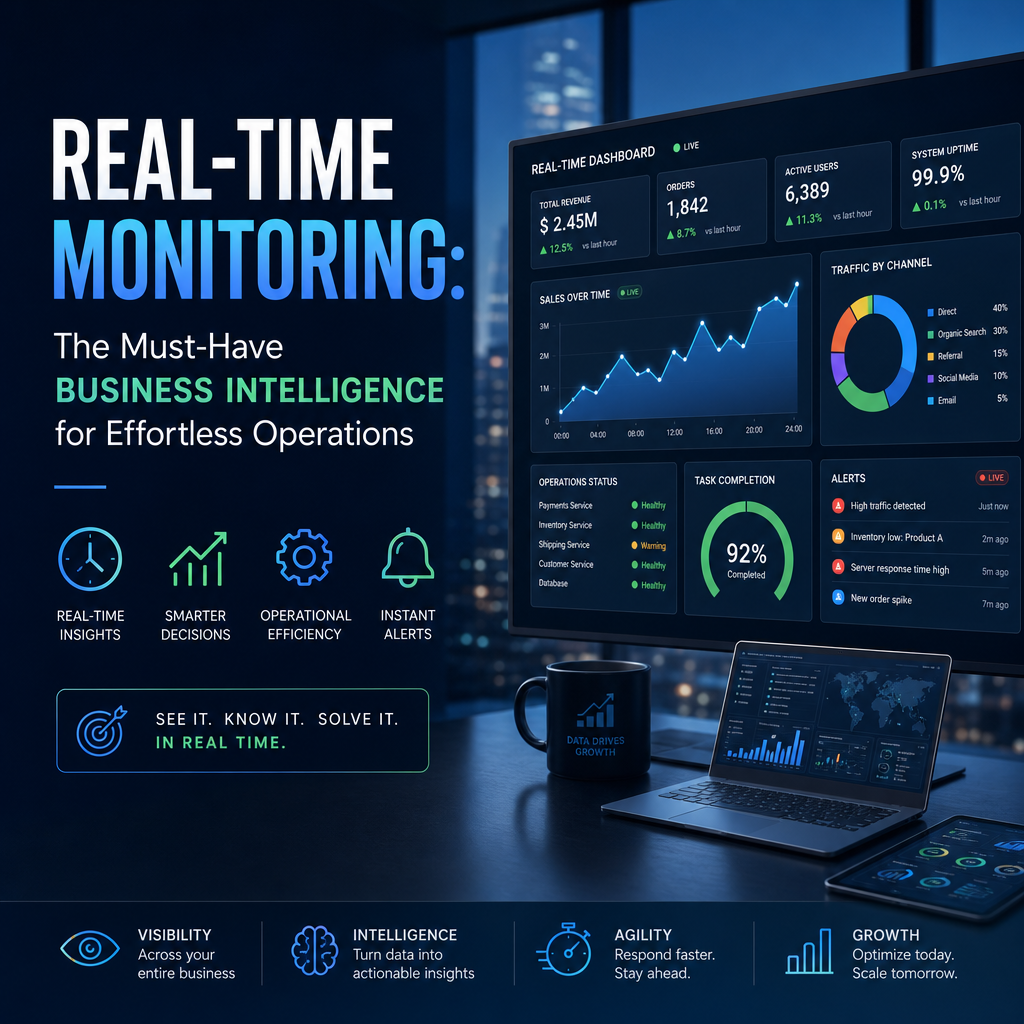
Real-time monitoring has become an indispensable element of modern business intelligence, enabling companies to operate with greater agility, precision, and foresight. As organizations face increasingly complex challenges and fast-paced market environments, the ability to access and analyze data instantaneously empowers decision-makers to respond promptly, avoid costly errors, and enhance overall efficiency.
Understanding Real-Time Monitoring in Business Intelligence
At its core, real-time monitoring involves continuously tracking key performance indicators (KPIs), operational metrics, and external data streams as they happen. Unlike traditional reporting, which often relies on periodic, retrospective analysis, real-time monitoring provides an up-to-the-minute snapshot of business health. This dynamic insight is woven directly into the fabric of business intelligence systems, which collect, process, and visualize vast amounts of data through advanced analytics platforms.
By integrating real-time monitoring into business intelligence frameworks, companies gain a constant flow of actionable information. For instance, a retail chain can track inventory depletion across multiple stores in real time, alerting managers when stock runs low or when sales suddenly spike unexpectedly. This immediate visibility allows rapid restocking decisions, reducing lost sales opportunities and improving customer satisfaction.
How Real-Time Monitoring Enables Effortless Operations
One of the biggest challenges businesses face today is maintaining smooth operations amid continuous change. Real-time monitoring addresses this challenge by providing early warnings of potential disruptions and enabling quick corrective actions.
– Proactive Issue Resolution: By detecting anomalies or deviations from expected performance instantly, businesses can intervene before minor issues escalate into major problems. For example, manufacturing plants can monitor machinery performance in real time to predict equipment failures and schedule maintenance proactively, thereby minimizing downtime.
– Improved Resource Allocation: Real-time data allows companies to allocate resources more efficiently. Whether adjusting workforce schedules based on fluctuating demand or optimizing supply chain logistics by tracking shipments live, organizations can dynamically adapt their operations without the inertia caused by outdated information.
– Enhanced Customer Experience: Monitoring customer interactions and feedback as they occur enables businesses to swiftly address complaints, personalize services, and improve satisfaction. Call centers, for instance, can track agent performance and customer wait times live, reallocating calls or resources as needed to maintain service quality.
The Critical Role of Business Intelligence in Real-Time Monitoring
Business intelligence platforms are the backbone of successful real-time monitoring strategies. These platforms consolidate data from diverse sources—internal systems, external feeds, IoT devices—and apply sophisticated analytics and machine learning algorithms to uncover insights quickly.
A well-designed BI system not only displays real-time dashboards but also supports automated alerts and predictive analytics, which anticipate future trends based on current data patterns. This capability transforms raw data into strategic intelligence, guiding operational decisions with evidence-based confidence.
Moreover, modern BI tools are increasingly user-friendly and customizable, allowing business users to define the metrics most relevant to their roles and receive tailored real-time updates. This democratization of data empowers teams throughout the organization to act swiftly and collaboratively.
Implementing Real-Time Monitoring: Best Practices
To harness the full benefits of real-time monitoring within business intelligence, companies should consider several best practices:
1. Identify Key Metrics: Focus on monitoring KPIs that directly impact business goals. Not every data point requires real-time tracking; prioritizing critical indicators helps avoid information overload.
2. Ensure Data Quality: Reliable real-time insights depend on accurate, clean data. Implement data governance processes to minimize errors and inconsistencies.
3. Integrate Systems Seamlessly: Achieving real-time monitoring requires interconnected data sources. Invest in integration platforms or APIs that can aggregate data quickly and securely.
4. Leverage Automation: Set up automated alerts and workflows that trigger actions when certain thresholds or anomalies are detected, reducing the need for constant manual checking.
5. Train Staff: Equip employees with the skills and knowledge to interpret real-time data and respond effectively, fostering a culture of data-driven decision-making.
Conclusion
Real-time monitoring represents a must-have component of modern business intelligence, unlocking the power to maintain effortless operations in a complex and dynamic environment. By enabling instantaneous visibility into critical metrics, it empowers companies to anticipate challenges, optimize resource use, and enhance customer satisfaction.
As technology continues to evolve, organizations that embrace real-time monitoring integrated with robust business intelligence platforms will gain a competitive edge, driving smarter decisions and sustained operational excellence. The time to incorporate these tools into your business strategy is now—ensuring you stay agile, informed, and ready for whatever the future holds.