
Financial Services Fraud: Top Risks and Must-Have Prevention Tips
May 28, 2026
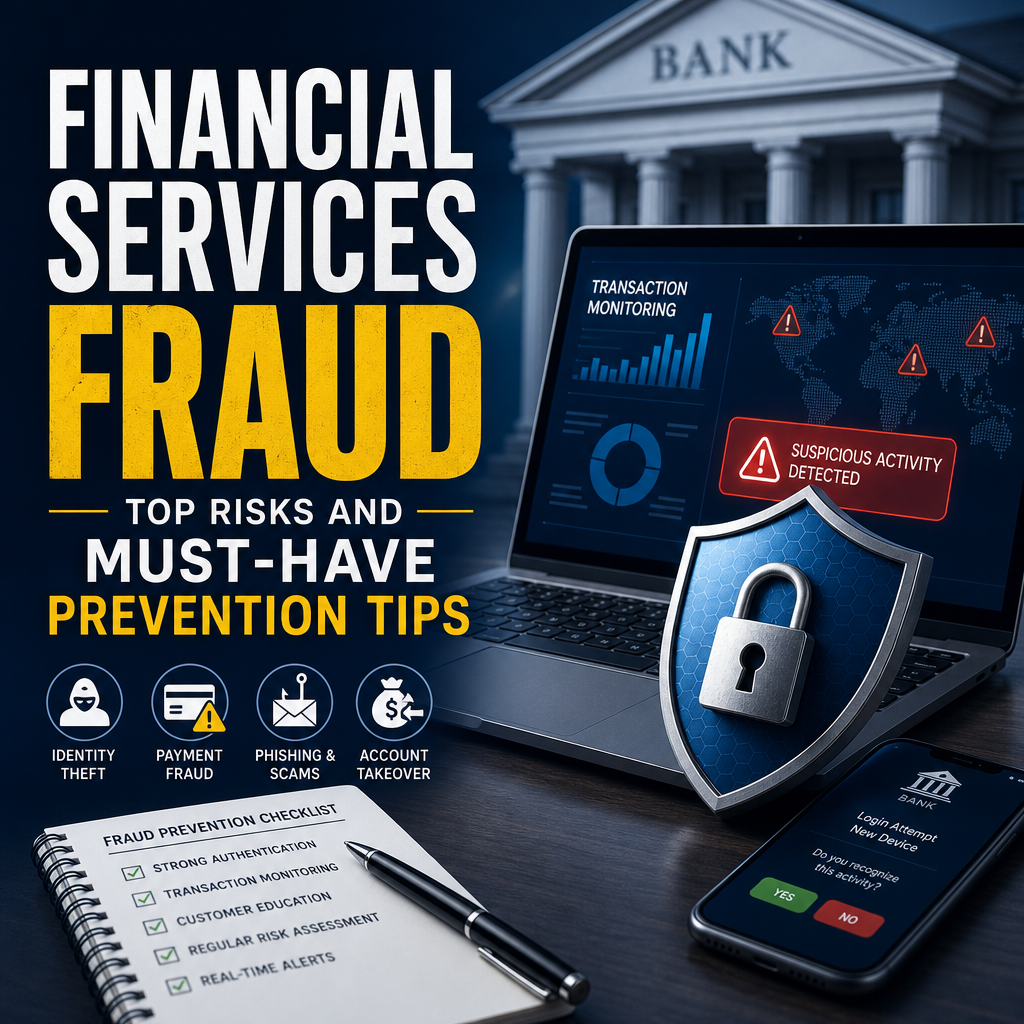
Financial services fraud poses a critical challenge to businesses and consumers alike, as criminals continuously devise new methods to exploit vulnerabilities in financial systems. Understanding the top risks involved and implementing robust prevention strategies is essential for safeguarding assets, maintaining trust, and complying with regulatory requirements.
Common Types of Financial Services Fraud
Financial services fraud encompasses a wide range of deceptive practices aimed at illegally obtaining money or sensitive information. Some of the most prevalent types include:
Identity Theft and Account Takeover
One of the most concerning risks is identity theft, where fraudsters steal personal information to gain unauthorized access to bank accounts, credit cards, or loans. Account takeover occurs when a criminal uses stolen credentials to make transactions or change account details, often causing significant financial damage.
Insider Fraud
Insider fraud involves employees or trusted individuals exploiting their access to company systems for personal gain. This can include embezzlement, manipulation of financial records, or unauthorized fund transfers. Since insiders have legitimate access, these schemes are harder to detect.
Payment Fraud
Payment fraud includes fraudulent transactions over credit cards, wire transfers, or mobile payments. Techniques like card-not-present fraud, phishing, and social engineering are frequently used to trick victims or bypass security measures.
Money Laundering
Money laundering disguises illegally obtained money as legitimate by moving it through complex transactions. Financial institutions are often targeted because of their role in processing large sums of money, which criminals use to “clean” funds from illicit activities.
Top Risks Associated with Financial Services Fraud
The constantly evolving nature of financial services fraud introduces several risks for companies and customers:
– Financial Loss: Direct monetary losses from fraudulent transactions can be substantial, impacting profitability and liquidity.
– Reputation Damage: Breaches of trust cause reputational harm, leading to customer attrition and difficulty acquiring new clients.
– Regulatory Penalties: Non-compliance with anti-fraud and data protection laws can result in hefty fines and legal consequences.
– Operational Disruptions: Investigating and mitigating fraud consumes valuable resources and may disrupt normal business operations.
– Data Breaches: Theft of personal and financial data can lead to prolonged security vulnerabilities.
Must-Have Prevention Tips to Combat Financial Services Fraud
Addressing the risks of financial services fraud requires a multi-layered approach combining technology, policy, and human vigilance.
Implement Advanced Authentication Measures
Strong authentication protocols such as multi-factor authentication (MFA) significantly reduce the risk of unauthorized access. Biometric verification and token-based authentication add further layers of security, making it harder for fraudsters to compromise accounts.
Use Real-Time Fraud Detection Systems
Deploying AI-powered fraud detection systems allows institutions to monitor transactions in real-time, flagging unusual behaviors and patterns. These systems can analyze vast data sets to identify suspicious activities and prevent fraudulent transactions before completion.
Educate Employees and Customers
Awareness is a powerful tool. Regular training programs for employees, emphasizing the significance of security best practices and spotting potential fraud indicators, help reduce insider risks. At the same time, educating customers on phishing scams, password security, and safe payment methods empowers them to protect their accounts.
Conduct Thorough Due Diligence and Know Your Customer (KYC) Checks
Robust KYC processes help verify the identity of clients and detect suspicious behavior at onboarding and throughout the relationship. This includes cross-referencing governmental lists, monitoring transaction histories, and reviewing account activity for anomalies.
Establish a Strong Internal Control Environment
Companies must institute clear policies, segregate duties to minimize conflicts of interest, and perform regular audits to detect discrepancies early. Encouraging whistleblower programs ensures employees can report suspicious actions confidentially.
Stay Updated on Regulatory Changes and Industry Best Practices
Financial regulations and fraud tactics continually evolve. Organizations should assign dedicated compliance teams to monitor updates, participate in industry forums, and enforce adherence to standards like PCI DSS and AML directives.
Invest in Cybersecurity Infrastructure
Effective cybersecurity protects systems from hacking and data breaches that can lead to financial fraud. Firewalls, encryption, vulnerability assessments, and endpoint protection form the foundation of a secure financial services operation.
Foster Collaboration with Law Enforcement and Industry Peers
Sharing fraud intelligence and collaborating with regulatory authorities help identify emerging threats more rapidly. Partnerships across financial institutions and government agencies strengthen the overall ecosystem’s resilience against fraud.
Conclusion
Financial services fraud represents a significant threat with complex manifestations and far-reaching consequences. However, by understanding the key risks and adopting comprehensive preventive measures—ranging from technological solutions to organizational policies—financial institutions can enhance their defense mechanisms. A proactive, informed approach not only protects assets and customer trust but also ensures sustained compliance and business continuity in an increasingly digital financial landscape.