
Financial Services Fraud: Must-Have Tips to Avoid Costly Risks
July 2, 2026
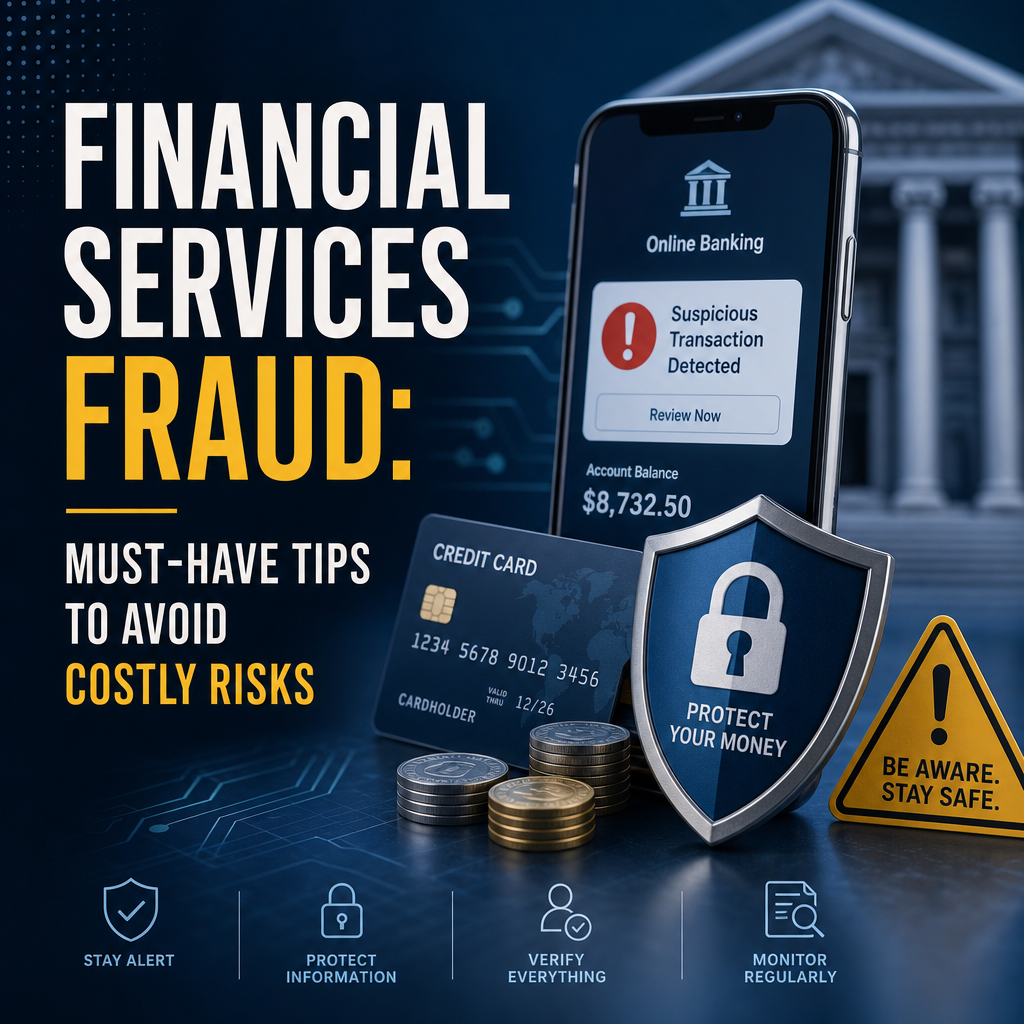
Financial services fraud poses a significant threat to both individuals and businesses, resulting in substantial financial losses and damaged reputations. With increasingly sophisticated methods used by fraudsters, understanding how to recognize and avoid these scams is essential. By adopting proactive measures and staying informed, you can protect yourself and your assets from costly risks associated with financial services fraud.
Understanding financial services fraud
Financial services fraud encompasses a wide range of deceptive practices aimed at stealing money or sensitive information. This can include identity theft, unauthorized transactions, phishing scams, Ponzi schemes, and insider fraud among others. Criminals often exploit vulnerabilities in financial systems or human trust to gain access to personal or corporate accounts, making it crucial to stay vigilant.
Common types of financial services fraud
1. Phishing and social engineering: Fraudsters use fake emails, phone calls, or websites to trick victims into revealing passwords or personal information.
2. Account takeover: Criminals gain control of bank or investment accounts and make unauthorized transactions.
3. Investment fraud: Scams promising high returns or fictitious investment opportunities lure victims into handing over funds.
4. Loan fraud: Fake lenders or fraudulent loan applications can cause financial losses or damage credit.
5. Credit card fraud: Unauthorized use of credit card details to make purchases or withdraw money.
Must-have tips to avoid costly risks of financial services fraud
1. Stay informed about the latest fraud tactics
Financial fraud evolves constantly, with criminals adopting new methods to bypass security measures. Subscribing to newsletters from trusted financial institutions or government agencies can help you stay updated on emerging threats and best practices to protect your accounts.
2. Use strong, unique passwords and two-factor authentication
One of the simplest yet most effective ways to prevent unauthorized access is by creating complex passwords that are difficult to guess. Avoid reusing passwords across different platforms. Enable two-factor authentication (2FA) where available to add an extra layer of security.
3. Monitor your financial accounts regularly
Checking your bank, credit card, and investment accounts frequently enables you to spot suspicious activity early. Set up alerts for transactions so you receive real-time notifications if anything unusual occurs. The sooner you detect fraud, the faster you can act to minimize losses.
4. Be cautious with unsolicited communications
Always verify the identity of anyone who contacts you claiming to be from your bank or financial institution. Fraudsters often impersonate legitimate entities to extract sensitive information. Never click on links or download attachments from unknown or unexpected emails, and avoid providing information over the phone unless you initiated the contact.
5. Protect your personal information
Safeguard documents such as Social Security cards, bank statements, and tax returns. Shred any financial paperwork before disposal. Also, limit the information you share on social media as fraudsters can use details like your birthday or address in identity theft schemes.
6. Use secure networks and devices
Avoid accessing financial services over public Wi-Fi networks which can expose your data to hackers. Ensure the devices you use to conduct financial transactions have updated antivirus software and operating systems to block malware and other cyber threats.
7. Choose reputable financial service providers
Research and select financial institutions with strong security protocols and positive customer reviews. Verify credentials and ensure the company is registered with appropriate regulatory bodies before investing or submitting loan applications.
8. Report suspicious activity promptly
If you suspect financial services fraud, contact your bank or financial service provider immediately to freeze accounts or block transactions. Also, report the incident to local law enforcement and agencies like the Federal Trade Commission (FTC) or equivalent in your country. Early reporting can limit damage and help authorities track fraudsters.
Conclusion
Financial services fraud is a pervasive and evolving challenge that demands constant vigilance and smart defensive strategies. By staying informed, practicing good cybersecurity habits, and verifying the legitimacy of any financial interaction, you can significantly reduce your exposure to these costly risks. Remember, prevention is always better than cure when it comes to protecting your financial health and peace of mind.