
AI Audit: Stunning Strategies to Boost Revenue Visibility Effortlessly
June 3, 2026
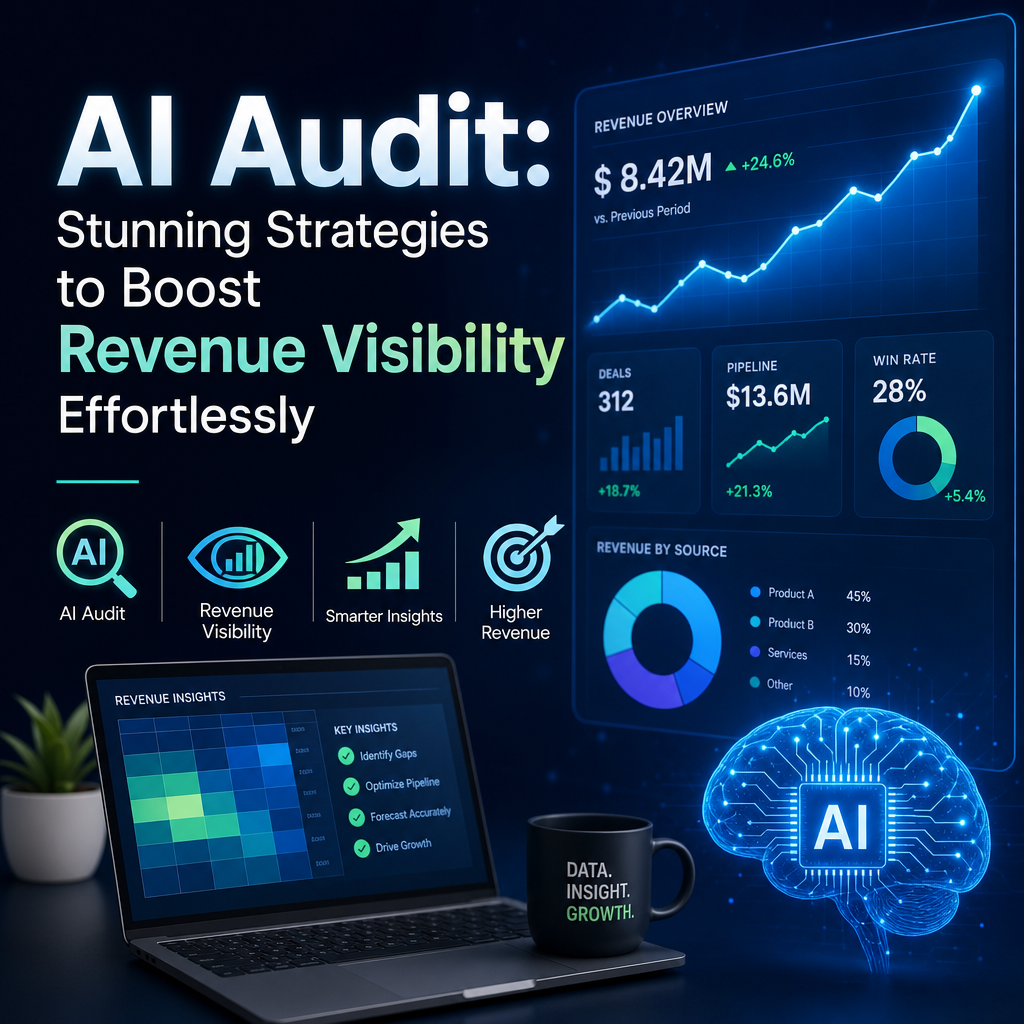
AI Audit has become a transformative tool for businesses aiming to enhance their revenue visibility and streamline financial insights. In today’s rapidly evolving digital landscape, leveraging artificial intelligence to conduct thorough audits allows companies to uncover hidden revenue opportunities and optimize their financial performance with minimal effort. This article explores stunning strategies that combine AI technology with audit practices to boost revenue visibility effortlessly.
Understanding AI Audit in the Context of Revenue Visibility
AI Audit refers to the use of artificial intelligence, including machine learning algorithms and data analytics, to examine and assess financial processes, transactions, and records. Unlike traditional auditing methods that rely heavily on manual data examination, AI audits automate vast amounts of data processing, identify irregularities, and deliver accurate insights quickly. This automation not only reduces human error but also enables businesses to gain real-time clarity on their revenue streams.
Revenue visibility is crucial for any organization’s growth and stability. Without clear understanding and monitoring of revenue, companies risk missed profit opportunities, delayed decision-making, and inefficient resource allocation. AI audits enhance this visibility by continuously analyzing sales data, payment flows, and contract management to ensure all income sources are accurately tracked and optimized.
Key Strategies in AI Audit to Enhance Revenue Visibility
1. Automated Data Integration and Analysis
One of the core strengths of AI audit tools is their ability to integrate data from multiple sources such as CRM systems, sales platforms, invoicing software, and payment gateways. By unifying these datasets, AI algorithms can detect revenue inconsistencies or gaps that manual audits often overlook. Strategic implementation of automated data integration enables businesses to monitor revenue in real-time and respond quickly to any discrepancies.
2. Predictive Analytics for Revenue Forecasting
AI-powered predictive analytics play a vital role in enhancing revenue visibility. These tools analyze historical sales data alongside market trends to forecast future revenues with great accuracy. During an AI audit, predictive models highlight potential revenue risks and growth opportunities, allowing companies to adjust pricing strategies, marketing efforts, and sales tactics proactively.
3. Fraud Detection and Revenue Leakage Prevention
An AI audit greatly improves the identification of fraudulent activities or revenue leakage, which could otherwise go unnoticed for extended periods. Machine learning algorithms examine patterns in transaction data that are unusual or suspicious, alerting auditors and management promptly. Preventing revenue leakage through early fraud detection safeguards the company’s bottom line and enhances financial transparency.
4. Continuous Monitoring for Agility
Unlike periodic traditional audits, AI audits offer continuous or near-continuous monitoring of financial data. This constant oversight provides businesses with a dynamic understanding of their revenue flow. When combined with automated alerts, it allows for immediate action on anomalies or shifts—thereby maintaining optimal revenue visibility at all times.
5. Enhanced Reporting with AI-Driven Insights
The final stage of an AI audit involves generating detailed reports that offer actionable business intelligence. These reports go beyond simple numbers to provide context, trend analysis, and recommendations that improve revenue management. Visual dashboards and interactive interfaces make it easier for stakeholders to grasp insights without technical complexity, facilitating strategic decision-making.
Implementing AI Audit: Best Practices to Maximize Revenue Visibility
Integrating AI audit tools successfully requires careful planning. Organizations should begin with a thorough assessment of their data infrastructure to ensure quality and accessibility. Training auditing teams to interpret AI outputs and collaborate with IT specialists ensures smooth adoption.
Additionally, businesses should prioritize selecting AI audit solutions that customize analytics to their specific industry and revenue models. This tailored approach yields more precise insights, from subscription-based services to retail or manufacturing sectors.
Maintaining robust cybersecurity measures during the AI audit process also protects sensitive financial data, reinforcing trust internally and with clients.
Conclusion
AI Audit offers stunning strategies to boost revenue visibility effortlessly by leveraging automation, predictive analytics, fraud prevention, continuous monitoring, and insightful reporting. Businesses that embrace AI-driven audits position themselves to capitalize on revenue opportunities with greater confidence and efficiency. By integrating these innovative techniques into financial practices, companies can achieve more transparent, agile, and profitable operations in today’s competitive market.