Utilities Revenue Assurance: Must-Have Strategies to Avoid Costly Risks
July 30, 2026
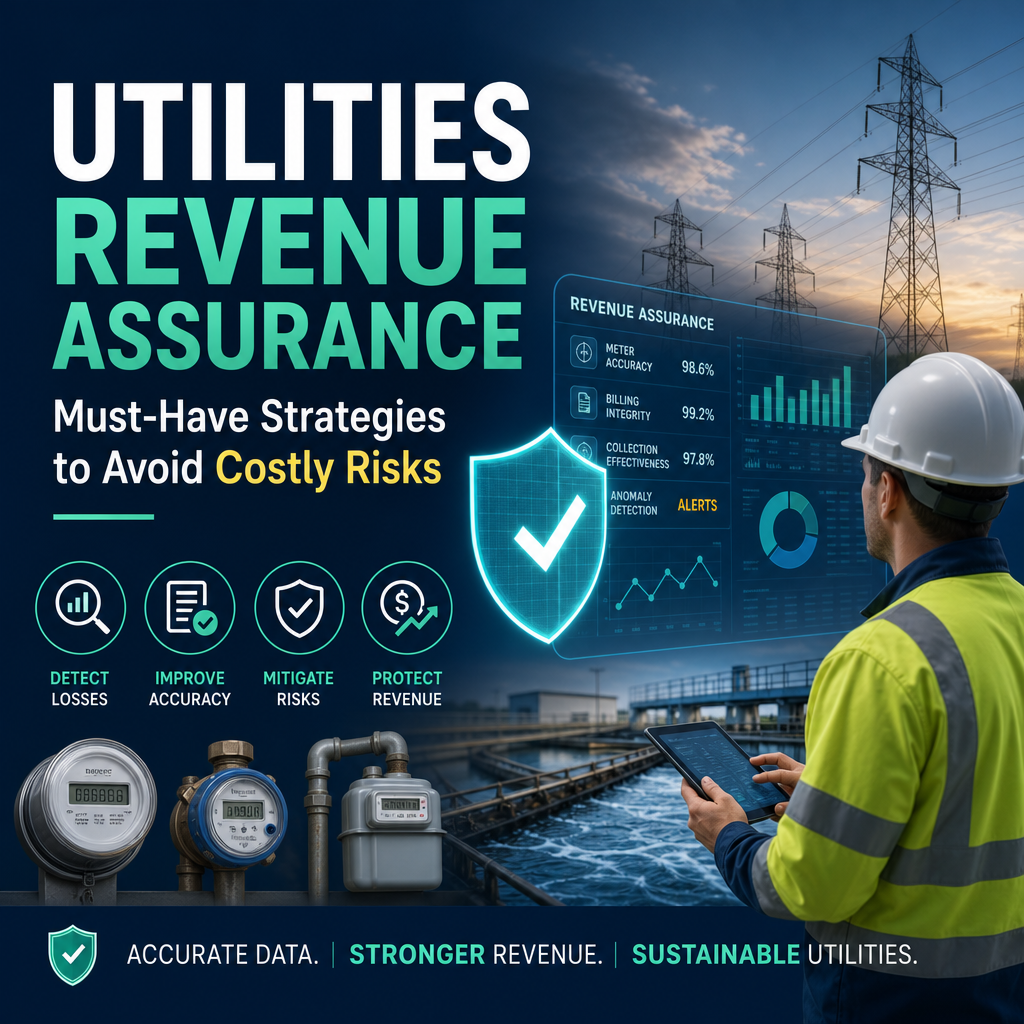
Utilities revenue assurance is a critical discipline for energy, water, and gas providers continuously facing financial challenges due to revenue leakage, billing errors, and system inefficiencies. As utilities operate in complex environments with vast infrastructures and diverse customer bases, adopting robust revenue assurance strategies is essential to safeguard income, improve operational efficiency, and maintain regulatory compliance. This article explores must-have strategies that utilities can implement to avoid costly risks and ensure sustainable financial health.
Understanding Utilities Revenue Assurance
At its core, utilities revenue assurance focuses on identifying and mitigating risks that lead to revenue loss throughout the entire value chain—from consumption measurement and billing to collections and regulatory reporting. Common sources of revenue leakage include inaccurate meter readings, data handling errors, unauthorized consumption, and inefficient billing processes. The growing integration of smart meters and digital technologies further complicates this landscape, making it imperative for utilities to adopt comprehensive assurance frameworks.
Why Utilities Revenue Assurance Matters
The utility sector traditionally works on thin margins, and every percentage of undetected or uncollected revenue significantly impacts profitability. Additionally, utilities often deal with regulatory scrutiny where financial discrepancies can lead to penalties or reputational damage. Effective revenue assurance translates into:
– Ensuring accurate revenue capture from all customers.
– Enhancing customer trust through transparent billing.
– Reducing operational costs by automating error detection.
– Improving resource allocation with better data insights.
– Complying with industry regulations to avoid fines.
Essential Strategies for Utilities Revenue Assurance
1. Implement Advanced Meter Data Management (MDM) Systems
Modern utilities must leverage smart meters and corresponding data systems that enable real-time consumption tracking. Advanced MDM software consolidates large volumes of heterogeneous data, verifies accuracy, and flags anomalies such as sudden consumption spikes or meter tampering. This technology provides the foundation for timely error detection, enabling utilities to intervene before revenue loss escalates.
2. Conduct Regular Revenue Leakage Audits
Periodic audits are critical to uncover hidden revenue leakage in processes and systems. By analyzing billing accuracy, meter deployment, and customer account management, utilities can pinpoint vulnerabilities. Audits should also include cross-functional reviews with IT, operations, and finance teams to ensure cohesive controls and accountability.
3. Employ Data Analytics and Machine Learning
Harnessing data analytics and machine learning can significantly enhance utilities revenue assurance efforts. Predictive analytics help identify unusual consumption patterns and customer behaviors that suggest fraud or billing mistakes. Machine learning models improve over time, increasing detection accuracy and reducing false positives, thereby streamlining investigations.
4. Strengthen Metering and Infrastructure Security
Meter tampering and cyber threats pose growing risks to revenue assurance. Utilities should invest in tamper-resistant meters, secure communication protocols, and rigorous access controls. Regular physical inspections combined with cyber monitoring can prevent unauthorized interventions that result in revenue loss.
5. Foster Cross-Department Collaboration
Effective revenue assurance requires breaking down silos between departments such as billing, customer service, technical operations, and compliance. Establishing clear communication channels and collaborative workflows ensures that potential issues are promptly escalated and resolved. Cross-department initiatives also promote a culture of accuracy and accountability.
6. Automate Billing and Reconciliation Processes
Automation reduces manual errors and speeds up billing cycles. Utilities should invest in integrated billing platforms that automatically reconcile consumption, rate changes, and payments. Automated alerts for account discrepancies allow timely follow-up, ensuring accurate revenue billing and collection.
7. Implement Customer Engagement Programs
Customer awareness and participation play a vital role in reducing non-technical losses. Education campaigns focused on legal consumption practices, meter maintenance, and reporting of faults strengthen community trust and cooperation. Utilities can also provide customers with self-service portals that enable consumption monitoring and timely bill payments.
Conclusion
In the rapidly evolving utilities sector, revenue assurance is a strategic imperative for preventing costly risks and sustaining financial viability. By combining technology-driven solutions like advanced meter data management and analytics with rigorous audits, security measures, and cross-functional collaboration, utilities can create resilient processes that protect their revenue streams. Investing in these must-have strategies not only reduces losses but also enhances customer satisfaction and regulatory compliance, positioning utilities for long-term success in an increasingly competitive marketplace.