
Revenue Visibility Challenges in Enterprise Systems: Must-Have Solutions for Success
August 2, 2026
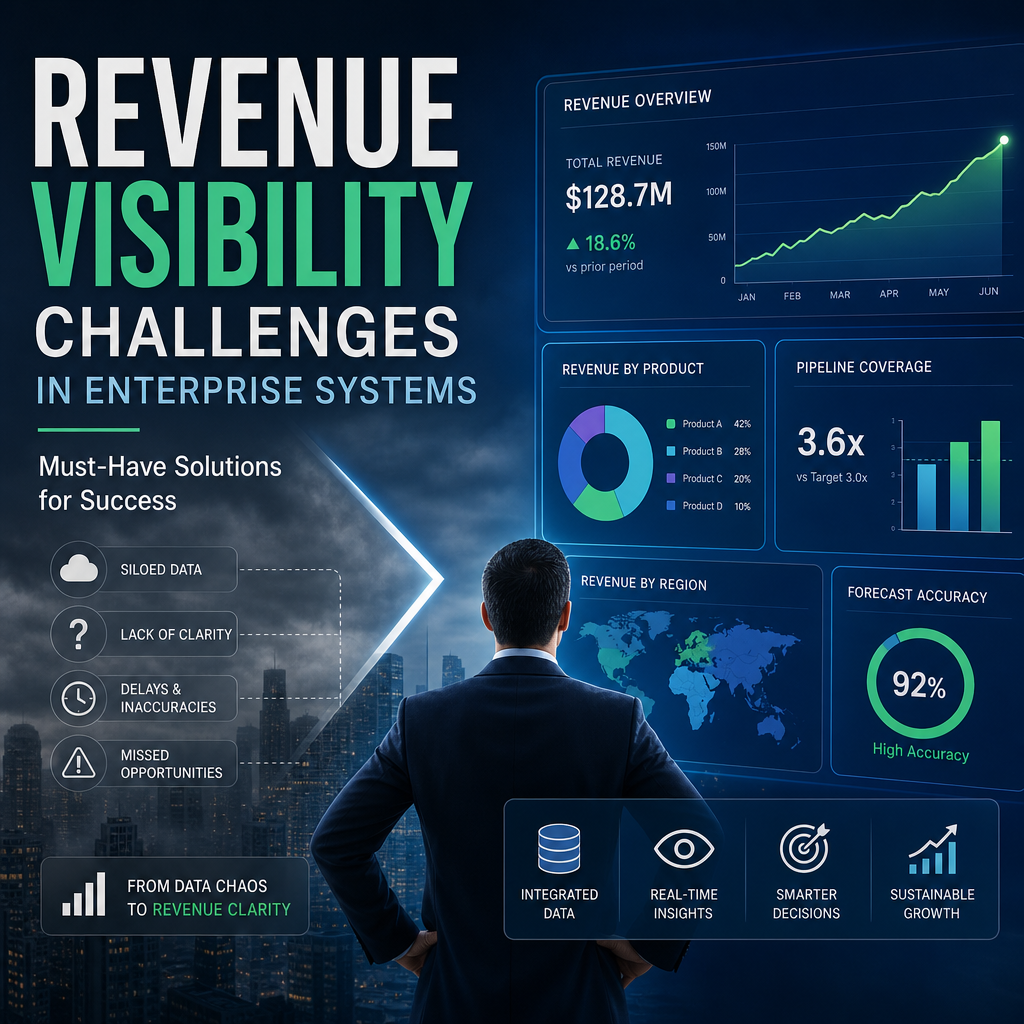
Revenue visibility challenges in enterprise systems pose a critical obstacle for businesses aiming to maintain financial clarity and make strategic decisions. As companies grow and their operations become more complex, ensuring transparent, accurate, and real-time insight into revenue streams becomes increasingly difficult. Overcoming these challenges is essential for driving sustainable growth, improving forecasting accuracy, and optimizing profitability.
Understanding Revenue Visibility in Enterprise Systems
In the context of enterprise systems, revenue visibility refers to the ability to capture, consolidate, and analyze revenue data from multiple sources and processes across the organization. This visibility enables key stakeholders—from finance teams to executives—to understand how revenue is generated, recognize trends, identify discrepancies, and anticipate future performance.
However, many enterprises struggle with fragmented data scattered across disparate systems such as CRM platforms, ERP software, billing systems, and sales tools. This fragmentation often leads to inconsistent reporting, delayed insights, and blind spots that undermine financial control.
Common Revenue Visibility Challenges in Enterprise Systems
1. Data Silos and Integration Issues
One of the biggest barriers to effective revenue visibility is the presence of data silos. Enterprise systems often operate independently, with limited interoperability. Without seamless integration, revenue data remains isolated in different departments or platforms, making it difficult to generate a unified view of financial performance.
2. Complex Revenue Recognition Rules
Enterprises frequently deal with complex contracts, subscription models, or multi-element arrangements requiring intricate revenue recognition practices. Inadequate or inconsistent application of accounting principles within enterprise systems can result in compliance issues and inaccurate financial reporting.
3. Incomplete or Inaccurate Data
Revenue visibility hinges on data quality. Errors, missing entries, or outdated information compromise the integrity of financial insights. Manual data entry and lack of automated validation introduce risks of mistakes that can cascade throughout reporting processes.
4. Lack of Real-Time Reporting
Traditional enterprise systems may update revenue figures only at the end of a billing cycle or accounting period. This delay restricts organizations from responding promptly to market fluctuations, identifying revenue leakage, or seizing growth opportunities.
5. Difficulty in Forecasting and Scenario Analysis
Without clear visibility into historic and current revenue streams, forecasting future earnings becomes a guessing game. Enterprises need tools that can provide predictive analytics and model different scenarios based on accurate data.
Must-Have Solutions to Overcome Revenue Visibility Challenges
1. Implement Integrated and Connected Enterprise Systems
Investing in platforms that provide seamless integration across sales, finance, billing, and customer management systems is crucial. Enterprise Resource Planning (ERP) systems with built-in connectors or Application Programming Interfaces (APIs) enable consolidated revenue reporting and reduce manual reconciliation efforts.
2. Automate Revenue Recognition Processes
Adopting specialized revenue management software or modules within ERP systems helps automate complex revenue recognition in compliance with accounting standards such as ASC 606 or IFRS 15. Automation reduces human error and ensures consistency in recognizing revenue according to contract terms.
3. Enforce Data Quality Management Practices
Establishing robust data governance frameworks supports ongoing data validation and cleansing. Automated workflows for data entry, error detection, and approval help maintain accurate and up-to-date revenue records critical for reliable visibility.
4. Leverage Real-Time Analytics and Dashboards
Deploying real-time analytics solutions embedded within enterprise systems empowers organizations to monitor revenue metrics continuously. Interactive dashboards and alerts enable finance teams and executives to detect anomalies, track performance, and make data-driven decisions efficiently.
5. Use Advanced Forecasting and Predictive Analytics
Integrating advanced analytics capabilities that utilize historical revenue data and current market indicators enhances forecasting accuracy. Machine learning models and scenario planning tools provide insights for strategic planning and resource allocation that can adapt to changing business needs.
The Business Benefits of Enhanced Revenue Visibility
Improving revenue visibility within enterprise systems delivers tangible benefits that extend beyond accounting accuracy. Companies gain greater financial agility, enabling them to optimize pricing strategies, reduce revenue leakage, and improve cash flow management. Transparent and timely revenue data also fosters stakeholder confidence and compliance with regulatory requirements.
Moreover, enhanced visibility aligns finance closely with sales and operations, promoting collaboration and ensuring business units work towards shared financial goals. This alignment supports scalability and resilience in dynamic market environments.
Conclusion
Addressing revenue visibility challenges in enterprise systems is not just a technical necessity but a strategic imperative. By implementing integrated solutions, automating revenue recognition, enforcing data quality, and leveraging real-time analytics, enterprises can achieve comprehensive, accurate, and actionable revenue insights. These capabilities empower organizations to navigate complexity, enhance financial performance, and secure long-term success in a competitive landscape.