
Revenue Leakage: 7 Must-Have Tips to Prevent Enterprise Fraud
July 28, 2026
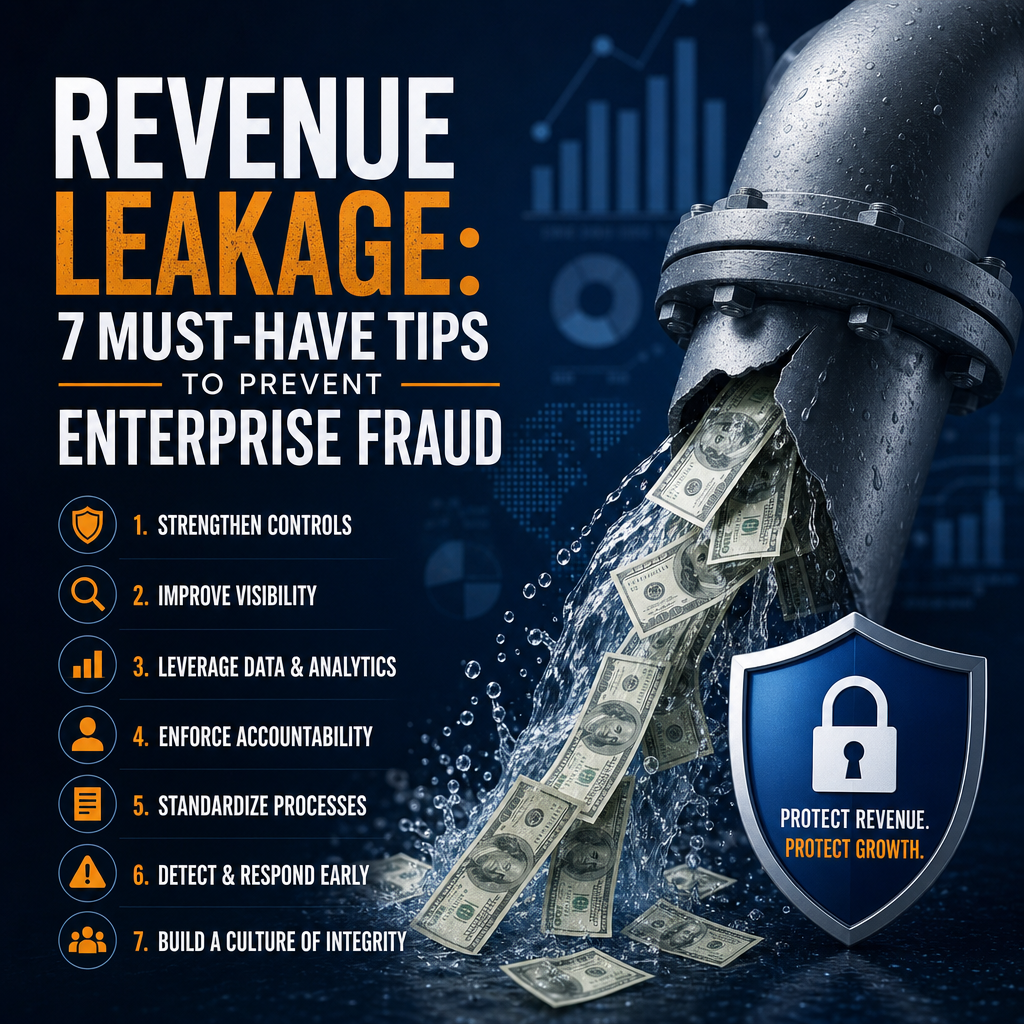
Revenue leakage is a critical challenge for businesses of all sizes, but it poses a particularly significant threat to large corporations where complex operations can create multiple vulnerabilities. When combined with the risks of enterprise fraud, revenue leakage can lead to substantial financial losses and operational inefficiencies. Understanding how to identify and prevent these issues is essential for maintaining a healthy bottom line and ensuring the sustainability of your organization.
What Is Revenue Leakage and How Does It Relate to Enterprise Fraud?
Revenue leakage refers to the loss of revenue due to inefficiencies, errors, or fraudulent activities within an enterprise. Unlike direct losses from fraud, it can be more subtle—often stemming from pricing errors, billing discrepancies, contract mismanagement, or overlooked revenue streams. Enterprise fraud, on the other hand, involves intentional deception by employees, partners, or customers to cause financial harm to a company. Both issues often overlap, with fraud being a key contributor to revenue leakage.
The complex nature of large enterprises means that even small gaps in internal controls or oversight can lead to millions of dollars lost over time. Therefore, having a strategic approach to monitoring and prevention is vital.
7 Must-Have Tips to Prevent Revenue Leakage and Enterprise Fraud
1. Strengthen Internal Controls and Compliance
One of the most effective ways to tackle revenue leakage and enterprise fraud is by establishing robust internal controls. This includes segregating duties so that no single employee has full control over financial transactions, implementing approval workflows for billing and payments, and ensuring compliance with industry regulations. Regular internal audits can also identify potential weak points before they become costly issues.
2. Implement Advanced Data Analytics
Employing data analytics tools enables enterprises to monitor transactions closely and flag unusual patterns that may indicate fraud or revenue leakage. Machine learning algorithms can analyze vast datasets in real-time to spot anomalies such as duplicate invoices, unusual discounts, or irregular pricing. Integrating these tools with your financial systems can provide continuous visibility over your revenue streams.
3. Improve Contract and Pricing Management
Revenue leakage often occurs because of poorly managed contracts or pricing agreements. By maintaining a centralized and automated contract management system, companies can ensure that pricing terms are consistently applied and updated. This also helps prevent unauthorized discounts or payments that reduce profitability.
4. Educate Employees and Promote a Culture of Integrity
Enterprise fraud is frequently enabled by employees who take advantage of lax oversight. Conducting regular training sessions to educate staff about fraud risks, ethical behavior, and reporting procedures helps create a transparent and accountable workplace culture. Encouraging whistleblowing without fear of retaliation is another key component in catching fraud early.
5. Automate Billing and Payment Processes
Manual billing processes are prone to human error, which can lead to revenue leakage. Automating these processes reduces errors such as incorrect invoicing or missed billings and speeds up revenue recognition. Automation also creates audit trails that make it easier to detect and investigate discrepancies swiftly.
6. Conduct Regular Revenue Assurance Audits
Revenue assurance involves ongoing review of revenue streams to ensure all potential revenue has been captured accurately. Performing frequent, comprehensive audits helps identify gaps such as unbilled services, contract breaches, or inaccurate reconciliations. The findings from these audits should be used to refine processes and enhance controls continually.
7. Leverage Technology Solutions Tailored for Fraud Detection
There are specialized software solutions designed with the express purpose of detecting and preventing enterprise fraud. These platforms use predictive analytics, risk scoring, and behavioral analysis to identify suspicious activities early. Investing in such technology not only safeguards revenue but also enhances overall operational efficiency.
Conclusion
Addressing revenue leakage and enterprise fraud demands a multifaceted approach that combines technology, processes, and people. By strengthening internal controls, leveraging data analytics, automating key processes, and fostering an ethical workplace culture, businesses can significantly reduce financial losses and protect their revenue streams. These seven tips serve as a solid foundation for any enterprise striving to safeguard its profitability and integrity in an increasingly complex business environment. Staying vigilant and proactive is the key to turning potential threats into opportunities for improvement.