
Enterprise Intelligence: Overcoming Must-Have Operations Challenges for Success
July 23, 2026
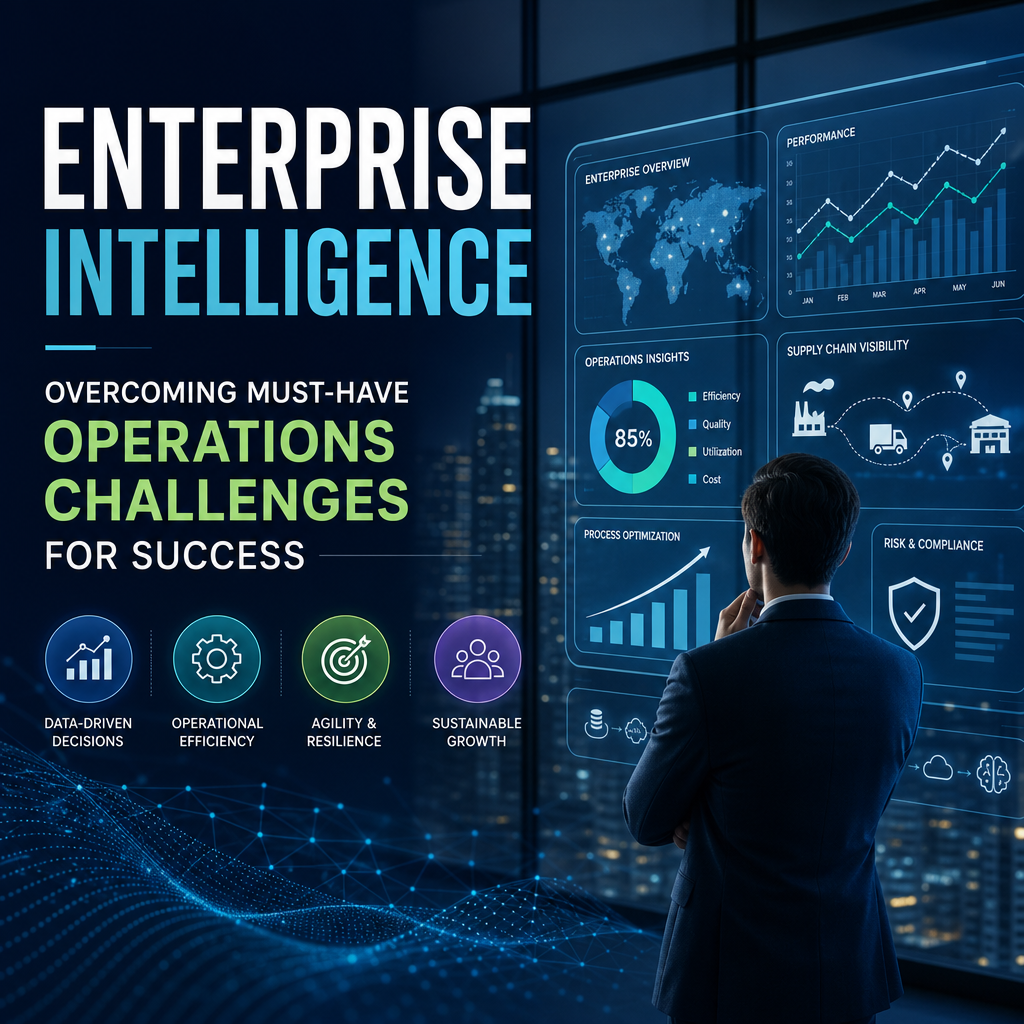
Enterprise intelligence plays a pivotal role in modern businesses striving for operational excellence and competitive advantage. As companies increasingly rely on data-driven decision-making, they must confront and overcome several must-have challenges in their operations to harness the full potential of enterprise intelligence. These challenges range from data integration and quality to cultural alignment and technology adoption, each critical for translating insights into sustainable business success.
Understanding Enterprise Intelligence and Its Impact on Operations
At its core, enterprise intelligence involves gathering, analyzing, and leveraging data from across an organization to enable smarter decision-making and streamline processes. This holistic approach transcends siloed data pools and isolated analytics efforts, aiming instead to create a unified, actionable intelligence platform that supports every operational facet.
Operations serve as the backbone of any enterprise, encompassing procurement, production, supply chain, customer service, and more. Incorporating enterprise intelligence into these operations means enabling continuous improvement through visibility into performance metrics, predictive analytics, and real-time reporting. However, achieving such integration is not without its hurdles.
Overcoming Data Integration Issues in Operations
One of the primary challenges for enterprises is consolidating data from disparate sources into a coherent system. Operations often involve multiple departments and external partners that use various software systems and formats. Without seamless integration, the intelligence gathered may be fragmented, incomplete, or outdated.
To overcome this, organizations should invest in robust data integration platforms capable of aggregating information from ERP systems, CRM tools, IoT devices, and external databases. This unified data environment empowers operations teams with accurate and timely insights. Additionally, standardizing data formats and establishing clear governance protocols ensure consistency and reduce errors.
Ensuring Data Quality for Reliable Enterprise Intelligence
Even the most advanced analytics are only as good as the quality of the underlying data. Poor data quality—characterized by inaccuracies, duplicates, or missing entries—can undermine trust in enterprise intelligence and lead to misguided operational decisions.
Addressing this challenge requires continuous data cleansing, validation, and enrichment processes. Incorporating automated tools that detect anomalies and flag inconsistencies early helps maintain high data standards. Equally important is fostering a culture where employees recognize the value of accurate data entry and maintenance as essential components of operational workflows.
Aligning Enterprise Intelligence with Operational Goals
Enterprise intelligence must be more than just technological sophistication; it needs to deliver tangible improvements aligned with business objectives. One common operational challenge is the disconnect between intelligence efforts and strategic priorities, which can lead to wasted resources and missed opportunities.
To bridge this gap, companies should clearly define key performance indicators (KPIs) linked to their operational goals and configure intelligence systems to monitor these metrics. Engaging cross-functional teams ensures that insights generated are relevant, actionable, and understandable at every organizational level. This alignment fosters accountability and drives continuous process optimization.
Building a Data-Driven Culture in Operations
Technological advancements alone do not guarantee successful enterprise intelligence implementation. A significant barrier lies in cultural resistance to change within operations teams accustomed to traditional methods.
Creating a data-driven culture requires strong leadership support, ongoing training, and effective communication about the benefits of intelligence initiatives. Encouraging collaboration between data analysts and frontline employees helps demystify analytics and build confidence in data-based decision-making. Celebrating quick wins and sharing success stories can accelerate adoption and reinforce the value of enterprise intelligence throughout operations.
Leveraging Emerging Technologies to Enhance Operational Intelligence
Modern enterprises have access to an expanding arsenal of technologies—artificial intelligence (AI), machine learning, robotic process automation (RPA), and advanced visualization tools—that can amplify operational intelligence capabilities.
By embedding AI-driven predictive analytics, organizations can anticipate supply chain disruptions, optimize inventory levels, and improve maintenance schedules. RPA can automate repetitive reporting and data gathering tasks, freeing employees to focus on more strategic activities. Interactive dashboards and natural language query tools make it easier for operational leaders to extract insights without deep technical expertise.
The key is to carefully evaluate which technologies align with existing workflows and scalability requirements, avoiding overly complex or costly implementations that may stall progress.
Conclusion
Enterprise intelligence is an indispensable asset for modern operations, but unlocking its full potential requires overcoming several must-have challenges. By addressing data integration and quality concerns, aligning intelligence with operational goals, cultivating a data-driven culture, and embracing emerging technologies thoughtfully, businesses can transform their operations into agile, insight-driven engines of growth.
In today’s fast-paced and data-rich environment, organizations that successfully conquer these challenges position themselves to outperform competitors, deliver superior customer experiences, and achieve long-term success.