
Utility Revenue Assurance: Must-Have Lessons to Prevent Costly Revenue Leakage
July 26, 2026
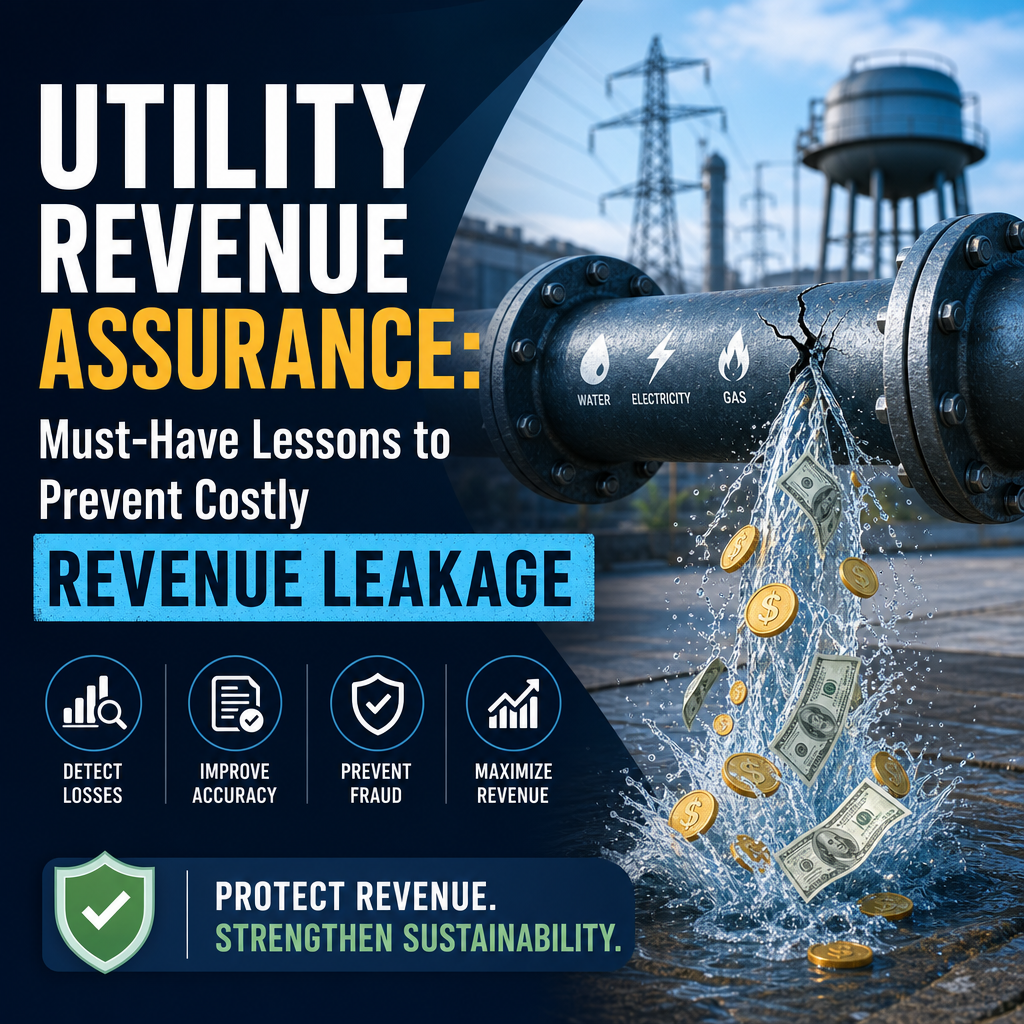
Utility revenue assurance is a critical practice for energy and water providers aiming to safeguard their earnings and maintain financial health. In an industry where small errors, technical faults, or procedural lapses can quickly escalate into significant financial losses, understanding how to prevent revenue leakage is essential. Revenue leakage not only affects a utility’s profitability but can also undermine service quality and operational sustainability. By learning the must-have lessons in utility revenue assurance, companies can adopt strategies to detect issues early, plug revenue gaps, and enhance efficiency.
Understanding the Importance of Utility Revenue Assurance
At its core, utility revenue assurance involves monitoring, analyzing, and optimizing all processes that generate revenue—from meter reading and billing to collections and reporting. The goal is to ensure that every unit of energy or water delivered is accurately measured, billed, and collected. Any gap between consumption and collected revenue represents leakage. Revenue leakage can stem from technical issues such as faulty meters, billing errors, theft, or even data mismanagement. In large utilities, these small discrepancies loom large, resulting in millions of dollars lost annually.
Common Causes of Revenue Leakage in Utilities
To effectively tackle revenue leakage, utilities must first identify its sources. Some frequent causes include:
– Metering errors: Old, damaged, or tampered meters can under-record consumption.
– Data handling issues: Inaccurate or delayed entry of consumption data can affect billing accuracy.
– Billing system flaws: Incorrect tariff application, missed accounts, or software glitches.
– Theft and pilferage: Unauthorized use or illegal connections.
– Human errors: Incorrect meter readings or delays in processing payments.
– Weak internal controls: Lack of audit mechanisms and oversight.
Recognizing these causes allows utilities to tailor their revenue assurance efforts and implement effective countermeasures.
Key Lessons to Prevent Revenue Leakage
Implement Robust Meter Management and Validation
One of the most significant steps in utility revenue assurance is ensuring meter reliability and accuracy. Routine checks, calibrations, and prompt replacement of malfunctioning meters reduce inaccuracies that cause revenue loss. Furthermore, integrating smart metering technology improves data collection frequency and precision, providing near real-time validation that can identify anomalies quickly.
Automate and Integrate Billing Systems
Billing inaccuracies are a major contributor to revenue leakage. Automating the billing process where possible and integrating meter data directly with accounting systems reduces manual entry errors. Sophisticated software can also automatically apply tariffs based on consumption tiers, discounts, and regulations, avoiding underbilling or overbilling.
Conduct Continuous Data Analytics and Audits
Ongoing analysis of consumption patterns, payment histories, and billing reports enables early identification of irregularities indicative of leakage. Analytics tools that use historical data and predictive modeling can flag unusual consumption drops or spikes that warrant investigation. Moreover, frequent internal and external audits provide additional assurance that controls are effective and compliant.
Strengthen Theft Detection and Management
Revenue leakage due to theft is both a technical and operational challenge. Utilities need robust theft detection mechanisms, including tamper alarms, anomaly detection in consumption data, and periodic physical inspections. Public awareness campaigns and liaison with law enforcement also help reduce unauthorized usage.
Establish Clear Accountability and Transparent Processes
Transparent roles and responsibilities for revenue assurance within the organization build accountability. Training staff to understand the financial impact of leakage and the importance of accurate data entry and reporting fosters an organizational culture prioritizing revenue integrity.
Leveraging Technology in Utility Revenue Assurance
Modern utilities increasingly rely on advanced technologies to combat revenue leakage. Smart meters, IoT sensors, and data analytics platforms give utilities tools to monitor consumption continuously and detect discrepancies early. Machine learning models can predict revenue losses and automate risk assessments. Blockchain technology is also emerging as a way to secure transaction records and enhance transparency.
Conclusion
Utility revenue assurance is indispensable for preventing costly revenue leakage that affects utilities’ bottom lines and service sustainability. By implementing lessons such as rigorous meter management, automated integrated billing, continuous data analytics, theft detection, and fostering organizational accountability, utilities can improve revenue capture significantly. Investing in technology and robust processes ultimately empowers utilities to operate more efficiently, build stakeholder trust, and continue providing essential services without financial strain. Understanding and applying these must-have lessons is not just good practice—it’s a business imperative in today’s competitive and regulated utility landscape.