
Hidden Revenue Loss: Stunning Signs Your Organization Faces Revenue Assurance Risks
June 30, 2026
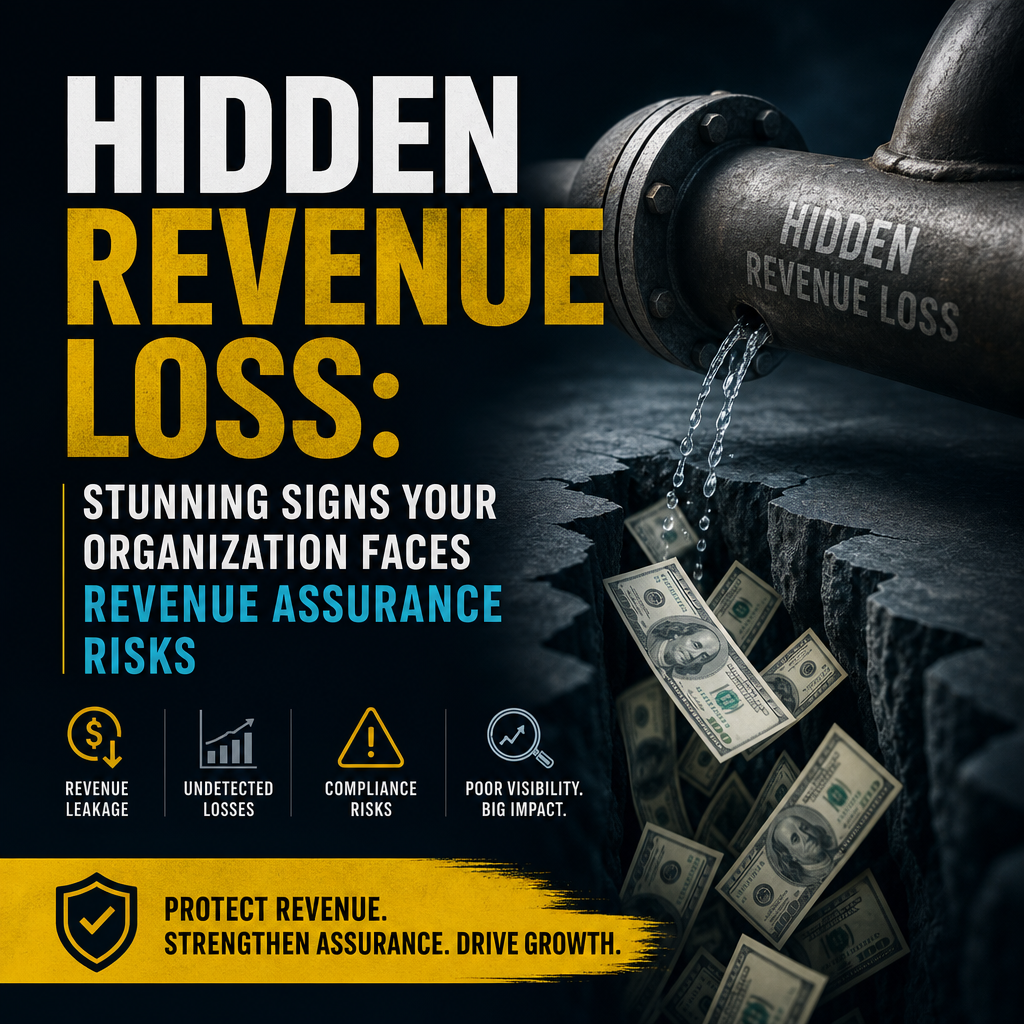
Hidden revenue loss can quietly erode an organization’s profitability without obvious warning signs, making it one of the most insidious challenges companies face today. Revenue assurance, a strategic approach to identifying and preventing such losses, is essential to maintaining financial health and operational efficiency. Understanding the subtle indicators your business might be at risk is the first step toward protecting your revenue streams and strengthening your bottom line.
What Is Hidden Revenue Loss?
Hidden revenue loss occurs when an organization fails to capture all the revenue it is entitled to, often due to process inefficiencies, errors, or fraud that go undetected. Unlike direct losses, which are apparent through clear financial discrepancies, hidden revenue losses are concealed within complex operational systems—often buried in billing errors, contract loopholes, or weak controls.
Organizations facing hidden revenue loss may think their accounts are balanced, yet unseen leakage slowly drains profits. This is where revenue assurance comes into play, focusing on rigorous monitoring and validation mechanisms to uncover these gaps before they become critical.
Stunning Signs Your Organization May Face Revenue Assurance Risks
Identifying revenue assurance risks early is crucial to averting costly setbacks. Here are some surprising signs that your organization might be experiencing hidden revenue loss:
1. Inconsistent Billing and Invoicing Data
Errors in billing and invoicing processes are one of the most common sources of hidden revenue loss. If customers frequently dispute charges or if internal audits reveal discrepancies between service delivery and invoiced amounts, this inconsistency signals potential revenue leakage. Inaccurate billing can stem from outdated systems, manual entry mistakes, or misaligned pricing models.
2. Lack of End-to-End Process Integration
When different departments operate in silos—such as sales, finance, and operations—there is an increased risk that revenue-related data will not align or be properly reconciled. This fragmentation can cause errors in pricing, contract terms, or collections, allowing revenue to slip through unnoticed.
3. High Rate of Adjustments and Write-offs
A persistent need to adjust invoices or write off receivables may indicate underlying process flaws or systemic errors. While some adjustments are expected in business operations, a higher-than-average rate suggests problems with revenue capture accuracy. These could include incorrect billing, unrecognized contract changes, or failure to enforce payment terms.
4. Poor Visibility into Customer Usage and Consumption
For businesses offering usage-based products or services, inaccurate measurement or reporting of customer consumption can result in undercharging. Without proper data capture and analysis, organizations may unknowingly forfeit revenue on unbilled or underbilled services.
5. Insufficient Monitoring of Contract Compliance
Revenue assurance risks increase significantly when contract terms, such as discounts, penalties, or bundled offerings, are not properly monitored or enforced. When contracts are complex and require manual tracking, mistakes are common, leading to revenue loss through unclaimed fees or unauthorized discounts.
How Revenue Assurance Mitigates Hidden Revenue Loss
Revenue assurance employs a systematic approach combining technology, analytics, and process improvements to detect and prevent revenue leakage. Here’s how it helps organizations shore up their defenses:
– Automated Data Reconciliation: Revenue assurance tools cross-reference billing, usage, and financial data across systems to detect inconsistencies quickly.
– Process Optimization: By streamlining workflows between departments and automating routine tasks, organizations reduce human errors that lead to revenue loss.
– Risk Identification and Prioritization: Advanced analytics highlight areas at greatest risk, enabling management to focus resources where they will have the most impact.
– Compliance Monitoring: Regular audits and real-time monitoring ensure contracts are correctly applied and pricing is enforced.
– Root Cause Analysis: Identifying not just where revenue loss occurs, but why, allows for long-term fixes rather than temporary patches.
Taking the First Step to Protect Your Revenue
Recognizing that hidden revenue loss exists within your organization is crucial—but knowing what signs to look for makes all the difference. Implementing a revenue assurance program tailored to your business needs can transform vague suspicions into concrete improvements, protecting your financial integrity and enhancing customer trust.
If you notice signs such as frequent billing disputes, unexplained write-offs, or departmental misalignment, it’s time to evaluate your revenue assurance capabilities. Addressing these risks proactively safeguards not just your revenues, but the viability and growth of your entire organization.
In today’s competitive landscape, the ability to uncover and prevent hidden revenue loss through revenue assurance isn’t just a best practice—it’s a business imperative.