Utilities Revenue Assurance: Must-Have Strategies to Avoid Revenue Risks
May 21, 2026
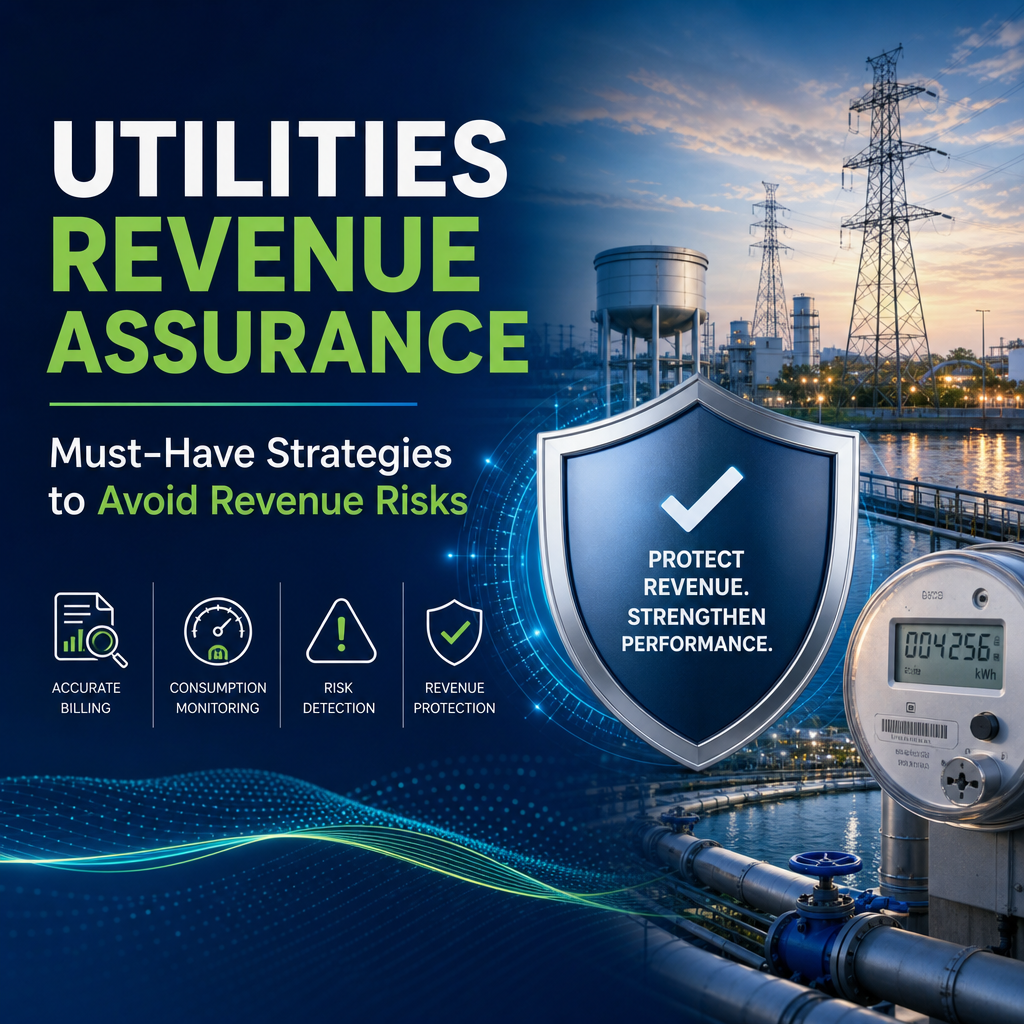
Utilities revenue assurance is a critical aspect of managing any utility company’s financial health and operational efficiency. As utilities face increasing demand, complex billing structures, and evolving regulatory requirements, ensuring accurate revenue collection while minimizing losses has never been more important. Implementing must-have strategies for revenue assurance helps utility providers avoid revenue risks, safeguard profits, and enhance customer satisfaction.
Understanding why utilities revenue assurance matters begins with recognizing the unique challenges faced by utility companies including electricity, water, gas, and telecommunications providers. Billing errors, data inaccuracies, theft, outdated metering systems, and inefficient data management can all contribute to significant revenue leakage. Without robust assurance practices, utilities risk losing millions in uncollected revenue, which may affect their ability to invest in infrastructure and deliver reliable services.
Why Utilities Need Revenue Assurance
Revenue assurance is the process of identifying and addressing gaps in the revenue lifecycle — from metering and data collection to billing and payment processing. In the utilities sector, losses can occur due to technical faults, human error, or fraud. Traditional auditing and manual checks are no longer sufficient to detect subtle inconsistencies or systematic risks. Utilities revenue assurance involves comprehensive monitoring, validation, and reconciliation mechanisms designed to close these gaps and ensure every unit of service provided is accurately billed and paid for.
With rising operational complexities, smart grids, and digital transformations, utilities require more sophisticated revenue assurance frameworks to stay ahead of revenue risks. By proactively managing these risks, utilities not only secure their income but also build trust with customers through accurate billing and transparent processes.
Key Utilities Revenue Assurance Strategies to Implement
1. Implement Advanced Meter Data Management (MDM)
Modern revenue assurance depends heavily on precise and timely metered data. Advanced Meter Data Management systems allow utilities to collect, validate, and analyze consumption data from smart meters or traditional meters remotely. MDM solutions help detect anomalies such as sudden spikes or drops in usage that may indicate meter tampering or technical faults. Managing metering data effectively reduces estimation errors and ensures bills reflect actual consumption, mitigating revenue leakage.
2. Automate Billing and Reconciliation Processes
Automation is a cornerstone of effective revenue assurance. Utilities should deploy integrated billing systems that automatically reconcile consumption data with billing records, flagging discrepancies for investigation. By minimizing manual interventions, automation reduces human errors and accelerates issue resolution. A real-time or near-real-time reconciliation process enables early detection of revenue losses and prompt corrective action.
3. Conduct Regular Data Audits and Analytics
Applying data analytics to billing and consumption information uncovers hidden patterns that signal potential revenue risks. For example, audit teams can identify irregular payment behaviors, repeat disputes, or suspicious data submissions. Regular audits complemented by predictive analytics empower utilities to pinpoint systemic issues, such as faulty meters or billing algorithm errors, before they escalate into larger financial losses.
4. Integrate Cross-Department Collaboration
Revenue assurance is not just a finance function—it requires collaboration between operations, IT, customer service, and compliance teams. Operations teams ensure the integrity of meter installations, IT provides data integrity safeguards, and customer service handles billing inquiries effectively. Establishing cross-functional workflows and shared accountability promotes swift resolution of revenue assurance issues and enhances overall efficiency.
5. Invest in Fraud Detection and Prevention Tools
Utilities are vulnerable to revenue risks from illegal connections, meter tampering, and billing fraud. Dedicated fraud detection systems use machine learning algorithms to monitor consumption patterns and alert on anomalies indicative of fraud. Investing in these technologies helps utilities protect revenue flows by catching and addressing fraudulent activities early.
The Benefits of Strong Utilities Revenue Assurance
Adopting a comprehensive approach to revenue assurance delivers measurable advantages. These include improved revenue collection rates, controlled operational costs, and enhanced regulatory compliance. Utilities also benefit from higher customer satisfaction due to accurate bills and transparent billing communications. Moreover, secure revenue streams enable reinvestment into infrastructure upgrades and innovation, driving long-term sustainability and growth.
Conclusion
Utilities revenue assurance is an essential practice to safeguard against revenue risks that can undermine a company’s financial stability. By embracing strategies like advanced metering, billing automation, data audits, cross-department collaboration, and fraud prevention, utilities can significantly diminish leakage and optimize revenue capture. The evolving landscape of utilities demands proactive revenue assurance measures to ensure ongoing success and reliable service delivery for customers.