
Security Governance Leadership: Why Effective Leadership Matters for Strong Protection
June 19, 2026
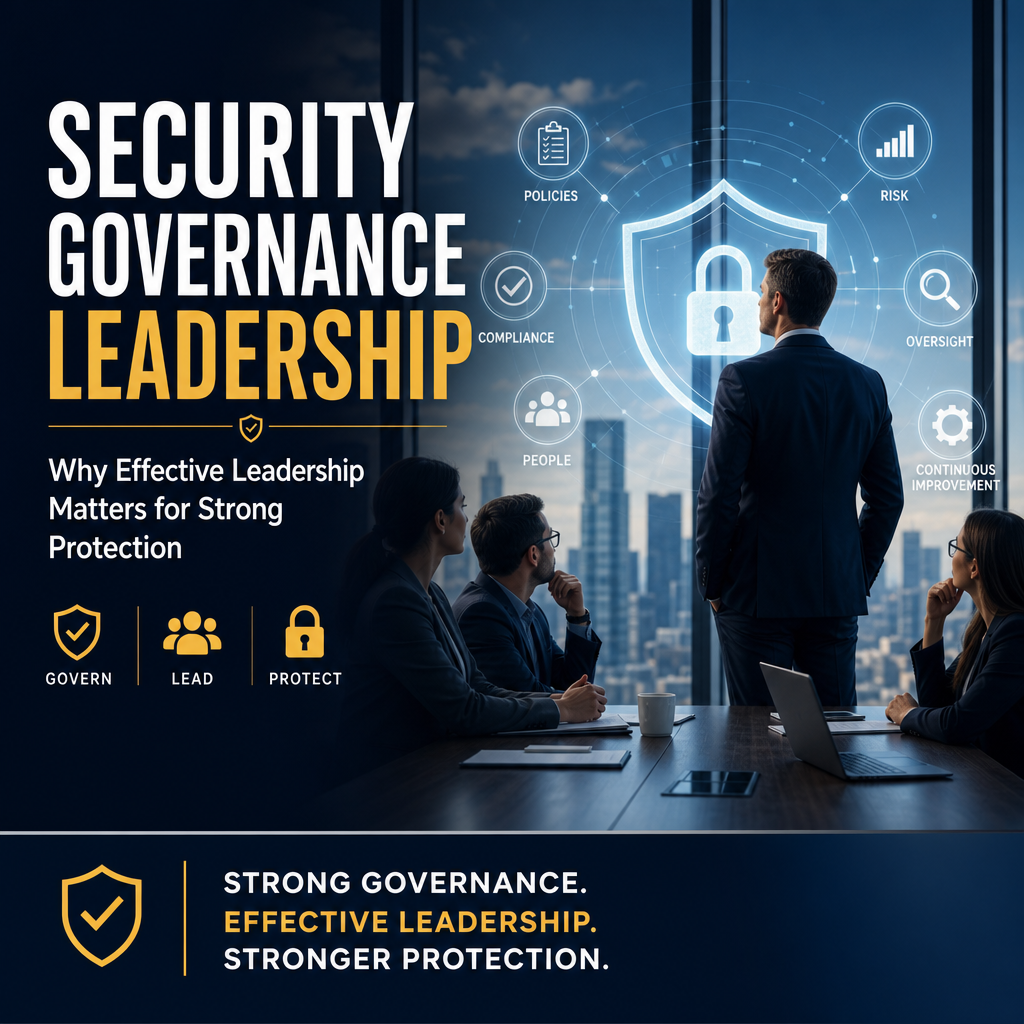
Security governance plays a crucial role in shaping an organization’s defense against a constantly evolving array of cyber threats. Without effective leadership at the helm, security initiatives can become fragmented, reactive, and ultimately insufficient in protecting critical assets. Leadership is the driving force behind establishing clear priorities, aligning security strategies with business objectives, and fostering a culture of accountability and vigilance.
Understanding Security Governance and Its Importance
Security governance refers to the framework of policies, processes, and controls established to manage and direct an organization’s information security efforts. It ensures that security risks are identified, assessed, and mitigated in a manner consistent with the organization’s risk appetite and regulatory requirements. However, simply having governance frameworks in place does not guarantee protection; the strength of security governance ultimately hinges on the quality of leadership guiding these initiatives.
Effective leadership ensures that security governance is not perceived as just an IT concern but a key organizational imperative. Leaders communicate the importance of security across all levels, facilitate resource allocation, and promote collaboration between departments such as IT, legal, compliance, and human resources. In this way, security governance becomes a holistic effort supported by everyone in the organization rather than isolated silos.
How Leadership Shapes Security Governance Success
One of the primary ways leadership impacts security governance is through the establishment of a clear vision and direction. Security leaders articulate what strong protection means for the organization, define objectives that make sense in the context of the business environment, and set measurable goals. This clarity allows teams to focus on relevant risks and avoid the trap of spending time on low-impact or outdated threats.
Moreover, leadership drives the adoption of risk management philosophies that prioritize both proactive and reactive measures. For example, strong leaders champion continuous monitoring and threat intelligence to anticipate attacks before they occur, while also ensuring robust incident response plans are in place for when incidents inevitably happen. The balance between prevention and preparedness is a hallmark of mature security governance.
Fostering a Security-First Culture Through Leadership
Leadership plays a vital role in shaping the culture around security governance. When executives and managers visibly champion security initiatives and model responsible behavior, it sends a clear message about the organization’s values and priorities. Employees are more likely to comply with security protocols, report suspicious activity, and participate in training when they see that leadership takes security seriously.
Effective leaders also invest in education and awareness programs to empower staff with the knowledge they need to act as the first line of defense. By integrating security principles into daily workflows and decision-making, leadership helps create a culture where security is ingrained rather than an afterthought.
Accountability and Transparency in Security Governance
Security governance leadership is also responsible for establishing accountability frameworks that hold individuals and teams responsible for their roles in protecting organizational assets. This includes defining clear roles and responsibilities, setting performance metrics, and regularly reporting on security posture to executive boards and stakeholders.
Transparency is equally crucial. Leaders who foster open communication about risks, incidents, and challenges build trust and encourage collaborative problem-solving. They avoid the pitfalls of “security by obscurity” and instead promote a culture where issues are addressed promptly and lessons are shared to prevent recurrence.
Challenges Leaders Face and How to Overcome Them
Despite their critical importance, security governance leaders often face significant challenges. Rapid technological change, increasing regulatory complexity, and sophisticated cyber threats require continuous adaptation. Additionally, competing business priorities can divert attention and resources away from security initiatives.
To overcome these challenges, leaders must stay informed about emerging trends, engage with the broader security community, and maintain agile governance structures that can evolve as needed. Importantly, they must also secure executive buy-in to ensure security is embedded in organizational strategy rather than treated as a mere compliance checkbox.
Conclusion
Security governance cannot succeed without strong leadership that drives strategy, fosters culture, and ensures accountability. Leadership is the linchpin that transforms governance frameworks into living protections that adapt to threats, safeguard assets, and enable business resilience. Organizations that prioritize effective security governance leadership position themselves to better anticipate risks and respond decisively, achieving stronger protection in today’s complex digital landscape.