
Revenue Assurance: Exclusive Next Generation Predictive Analytics for Best Results
June 8, 2026
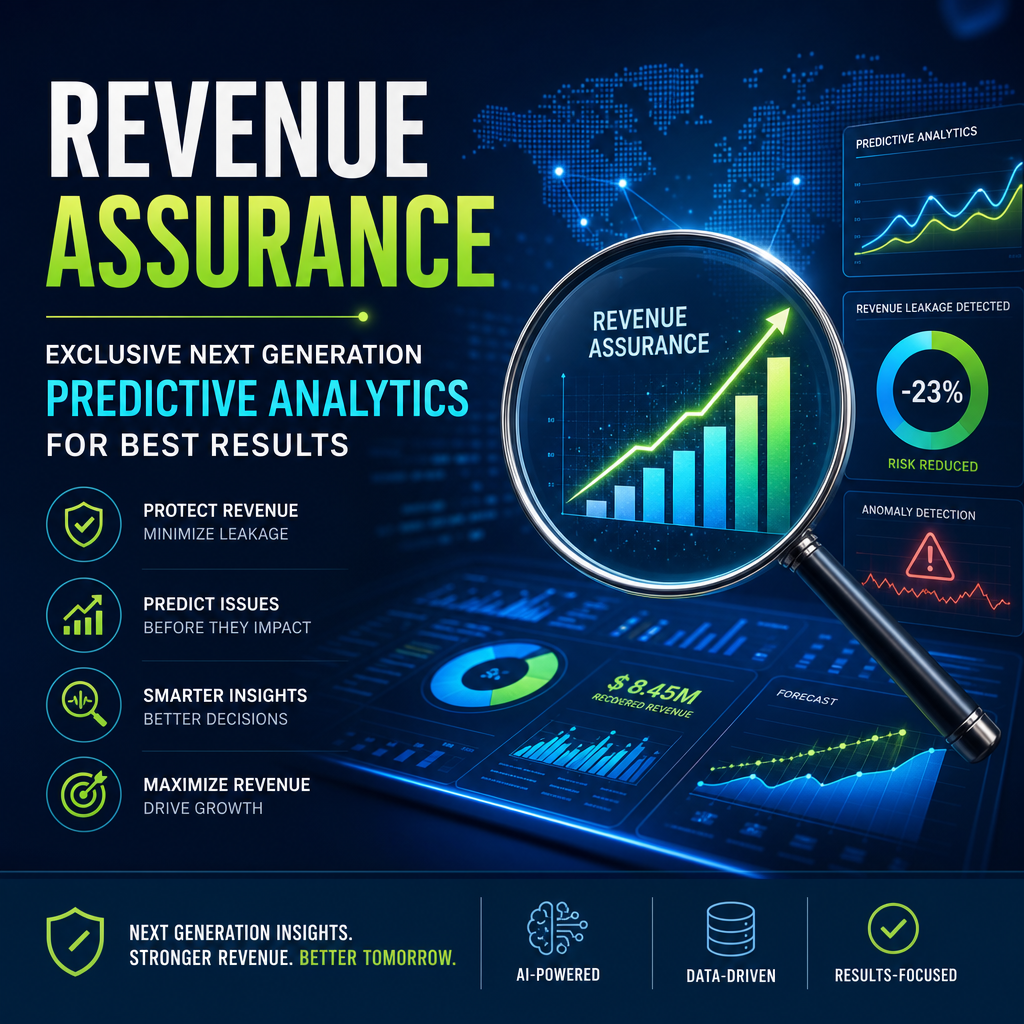
Revenue assurance is a critical discipline for businesses aiming to maximize profitability and secure financial stability. Leveraging exclusive next generation predictive analytics takes revenue assurance to the next level by providing sharper insights, proactive revenue leakage prevention, and optimized operational efficiency. In an increasingly competitive market, organizations adopting these advanced analytics tools position themselves for sustainable growth and superior results.
Understanding Revenue Assurance and Its Importance
At its core, revenue assurance involves the processes and controls that organizations implement to ensure all due revenue is accurately captured, billed, and collected. Businesses, especially those in telecommunications, utilities, and financial services, often face revenue leakage due to complex billing systems, data errors, fraud, or compliance issues. These leaks not only cause direct financial losses but also undermine market trust and operational integrity.
Traditional revenue assurance has relied on reactive monitoring and manual reconciliation. However, the rapid growth in data volume and complexity demands more sophisticated, automated approaches. Here, predictive analytics emerges as a game changer, enabling companies to anticipate issues before they occur and take corrective action in real time.
How Predictive Analytics Transforms Revenue Assurance
Predictive analytics, powered by machine learning and artificial intelligence, uses historical data to forecast future events, trends, or behaviors. Integrating this technology into revenue assurance practices allows organizations to detect anomalies, predict revenue leak points, and optimize resources for maximum impact.
For example, predictive models can analyze transaction patterns to flag unusual activities indicative of fraud or billing errors. They can also forecast demand changes, helping companies adjust pricing or service provisions effectively. This proactive insight dramatically reduces the time and effort spent on investigating discrepancies after the fact.
Exclusive Next Generation Predictive Analytics Features for Best Results
Next generation predictive analytics platforms for revenue assurance offer several exclusive features that set them apart from legacy systems:
– Real-time Data Processing: Instead of relying on batch processing, these platforms analyze data in real time, enabling instant detection and correction of revenue risks.
– Advanced Machine Learning Algorithms: By continuously learning from new data, the system improves accuracy in predicting issues and reduces false positives.
– Cross-Source Data Integration: They combine data from billing, CRM, network operations, and external sources to provide a comprehensive view of revenue streams.
– Automated Workflow Integration: Alerts and insights seamlessly integrate into business workflows, ensuring timely responses without disrupting operations.
– Scenario Simulation and Impact Analysis: Businesses can simulate different corrective actions to estimate potential revenue recovery and select the best strategy.
This combination of capabilities allows organizations to maintain a high level of vigilance and agility in managing their revenue.
Practical Benefits of Using Predictive Analytics in Revenue Assurance
Implementing next generation predictive analytics solutions in revenue assurance delivers measurable business benefits:
– Improved Revenue Recovery: Early identification of revenue leakages helps reclaim lost income before it impacts financial results.
– Reduced Operational Costs: Automation of detection and resolution processes cuts down manual labor and associated expenses.
– Enhanced Customer Satisfaction: Accurate billing and timely dispute resolution boost customer trust and reduce churn.
– Stronger Fraud Prevention: Predictive models uncover sophisticated fraud patterns that traditional methods might miss.
– Regulatory Compliance: Continuous monitoring ensures adherence to regulatory standards minimizing audit risks.
Organizations that deploy these analytics tools report increased return on investment, as well as strategic advantages in market positioning.
Steps to Implement Next Generation Predictive Analytics for Revenue Assurance
To maximize the benefits, companies should follow a structured approach to adopting these advanced tools:
1. Assess Current Revenue Assurance Capabilities: Identify gaps and vulnerabilities in existing processes.
2. Choose the Right Technology Partner: Select vendors that offer proven predictive analytics platforms tailored for revenue assurance.
3. Integrate Data Sources: Ensure seamless connectivity between all relevant enterprise systems.
4. Train Teams and Refine Models: Develop in-house expertise and iteratively improve analytics accuracy.
5. Monitor, Review, and Adapt: Continuously evaluate performance and evolve strategies as business conditions change.
A thoughtful combination of technology, people, and processes is essential for achieving best results.
The Future of Revenue Assurance with Predictive Analytics
As data volumes continue to grow and revenue models become more complex, revenue assurance’s reliance on next generation predictive analytics will only deepen. Emerging trends like edge computing, real-time AI, and blockchain integration promise even greater transparency and security for revenue management.
Businesses investing in these innovations will not only protect their bottom line but also unlock new revenue opportunities through smarter customer insight and operational efficiency. Ultimately, predictive analytics is no longer just a tool but a strategic enabler for revenue assurance success in tomorrow’s dynamic marketplace.