
AI Trends Shaping Enterprise Revenue Intelligence: Exclusive Must-Have Insights
June 1, 2026
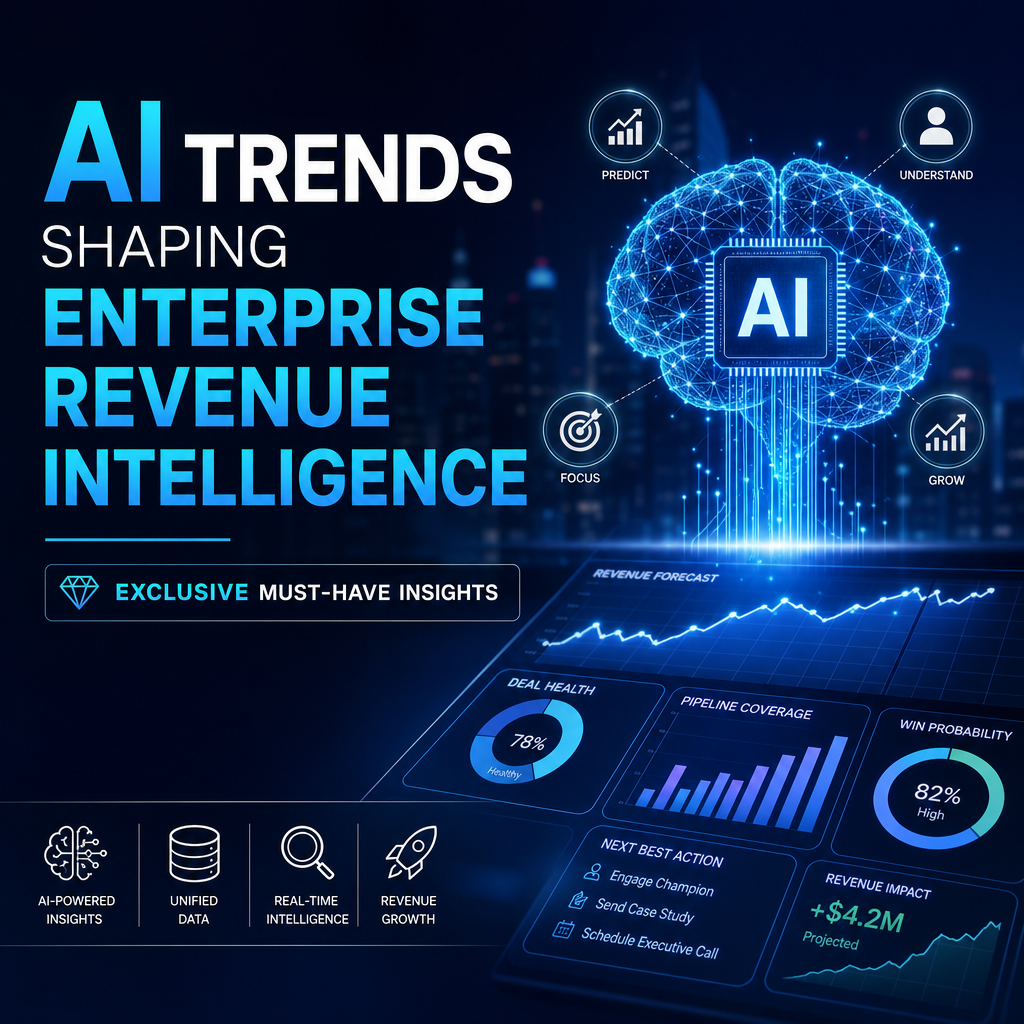
AI trends have become pivotal in transforming how enterprises leverage revenue intelligence to drive growth and optimize decision-making processes. As businesses navigate an increasingly complex marketplace, the integration of advanced AI capabilities offers unprecedented opportunities to enhance revenue forecasting, customer insights, and sales performance. Understanding these AI trends is essential for organizations seeking to stay competitive and unlock new revenue streams through intelligent data-driven strategies.
The Rise of Predictive Analytics in Revenue Intelligence
One of the most significant AI trends impacting revenue intelligence is the rise of predictive analytics. By utilizing machine learning algorithms and historical sales data, enterprises can forecast future revenue more accurately than ever before. Predictive models analyze patterns and anomalies to identify potential opportunities and risks, enabling sales teams to focus efforts where they matter most. As a result, businesses can anticipate market shifts, optimize pricing strategies, and improve resource allocation to maximize revenue outcomes.
This shift toward predictive analytics also enhances the accuracy of quota setting and pipeline management, moving away from guesswork to a more data-driven approach. Modern AI systems continuously learn and adapt, providing dynamic insights that evolve with changing market conditions, thereby facilitating smarter and faster decision-making.
Natural Language Processing for Deeper Customer Insights
Another crucial AI trend shaping revenue intelligence is the integration of natural language processing (NLP) technologies. NLP allows enterprises to extract actionable insights from unstructured data sources such as emails, call transcripts, social media, and customer reviews. By analyzing the tone, sentiment, and intent behind customer communications, organizations gain a more holistic view of buyer behavior and preferences.
This advanced understanding helps sales and marketing teams tailor their strategies to meet specific customer needs and pain points, fostering stronger relationships and higher conversion rates. Moreover, NLP-powered tools can automate routine tasks like lead qualification and customer feedback analysis, freeing up valuable time for revenue teams to focus on strategic initiatives.
AI-Driven Automation Enhancing Sales Productivity
Automation powered by AI is revolutionizing how enterprises manage repetitive tasks within revenue functions, another critical AI trend. From automating lead scoring and follow-up reminders to generating personalized content and proposals, AI-driven automation enables sales reps to operate more efficiently and effectively.
By reducing manual workloads, employees can focus on nurturing high-value prospects and closing deals, directly impacting revenue growth. Additionally, automated workflows minimize errors and ensure consistent engagement with customers across multiple touchpoints, strengthening the overall buyer experience.
Real-Time Revenue Intelligence Dashboards
The demand for real-time insights is reshaping the landscape of enterprise revenue intelligence, supported by AI’s ability to process vast amounts of data instantaneously. Modern dashboards powered by AI aggregate data from CRM systems, financial software, and external market indicators to provide a comprehensive and up-to-date view of revenue performance.
These dashboards enable executives and revenue operations teams to monitor key performance indicators (KPIs), track progress toward targets, and promptly address emerging issues. Real-time revenue intelligence fosters agility, allowing organizations to pivot strategies swiftly in response to evolving business environments.
Ethical AI and Data Privacy Considerations
With the growing reliance on AI in revenue intelligence, another emerging trend is the focus on ethical AI and data privacy. Enterprises recognize the importance of deploying AI solutions that are transparent, unbiased, and secure to maintain customer trust and comply with regulations like GDPR and CCPA.
Implementing ethical AI frameworks ensures that revenue intelligence initiatives do not inadvertently discriminate or compromise sensitive information. This commitment to responsible AI use not only mitigates legal risks but also enhances brand reputation and customer loyalty.
Preparing for the Future of Revenue Intelligence
As AI trends continue to evolve, enterprises must invest in scalable AI technologies and build cross-functional teams capable of interpreting and acting on AI-driven insights. Workforce training on AI applications in revenue intelligence is crucial to maximize adoption and impact.
Furthermore, organizations should prioritize integrating AI tools seamlessly with existing systems to create a unified infrastructure that supports end-to-end revenue optimization. Continuous evaluation and adaptation of AI strategies will ultimately ensure sustainable competitive advantages in a rapidly changing market.
In conclusion, AI trends are profoundly shaping enterprise revenue intelligence by enabling more accurate forecasting, deeper customer understanding, enhanced productivity, and real-time monitoring, all while emphasizing ethical considerations. By embracing these insights, enterprises position themselves to unlock new levels of revenue growth and business success in the digital age.