
Cyber Threats: Must-Have Solutions to Minimize Business Risk and Protect Revenue
May 29, 2026
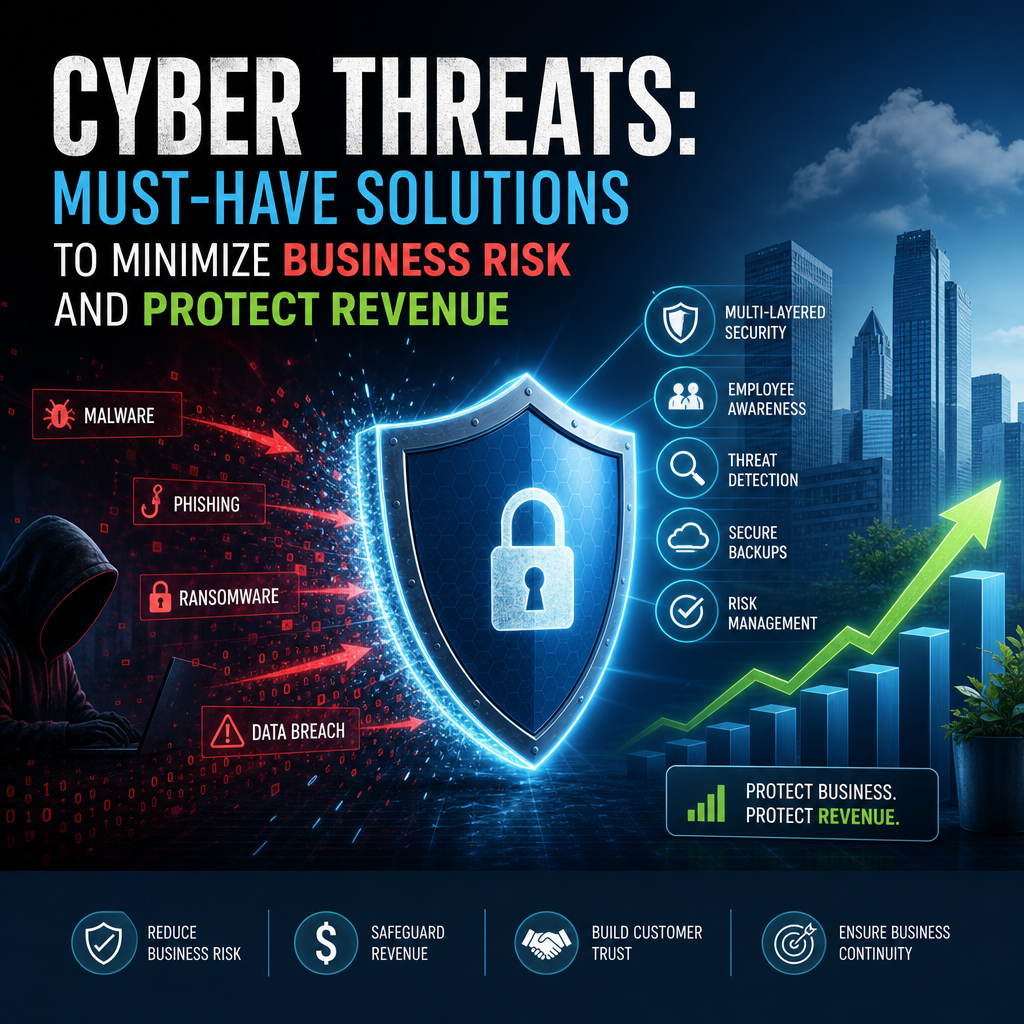
Cyber threats are one of the most pressing concerns facing businesses today. As organizations increasingly rely on digital infrastructure, the risk to sensitive data, operational continuity, and revenue streams intensifies. Minimizing business risk from cyber threats requires a proactive and comprehensive approach that integrates the right technology, policies, and employee awareness. Companies that invest in these must-have solutions position themselves to not only defend against attacks but also maintain customer trust and revenue stability.
Understanding Cyber Threats and Their Impact on Business Risk
Cyber threats encompass a wide range of malicious activities, from ransomware and phishing scams to data breaches and insider attacks. Each type of threat carries distinct implications for an organization’s security posture and financial health. For example, a data breach might expose customer information and trigger costly legal penalties, while ransomware could bring operations to a halt until demands are met.
The business risk associated with these threats extends beyond immediate financial loss. Reputational damage, loss of intellectual property, and regulatory fines add layers of complexity. Quantifying this risk is critical for identifying vulnerabilities and prioritizing the most effective solutions.
Must-Have Solutions to Minimize Business Risk from Cyber Threats
1. Robust Endpoint Security
Every device connected to a company network represents a potential entry point for cybercriminals. Implementing advanced endpoint security solutions, including antivirus software, endpoint detection and response (EDR), and device encryption, helps guard against malware, unauthorized access, and suspicious behavior. Regular updates and patches are essential to close loopholes before they can be exploited.
2. Multi-Factor Authentication (MFA)
Password-based access controls are often inadequate on their own. Multi-factor authentication adds an additional layer of verification by requiring users to provide multiple forms of identification before accessing sensitive systems. MFA significantly reduces the risk of credential theft, which is a common method for initiating cyberattacks.
3. Employee Training and Awareness Programs
Humans are frequently the weakest link in cybersecurity. Phishing attacks, for example, rely on social engineering to trick employees into revealing credentials or downloading harmful software. Continuous training efforts that educate staff about cyber threats, safe online behavior, and how to recognize suspicious activity can dramatically decrease the likelihood of successful attacks.
4. Data Encryption and Secure Backups
Encrypting data both in transit and at rest safeguards it from interception and unauthorized viewing. Additionally, maintaining secure and regularly updated backups ensures that critical information can be restored quickly after an incident, minimizing downtime and preserving revenue continuity.
5. Regular Security Assessments and Penetration Testing
Conducting routine security audits helps identify vulnerabilities in networks, applications, and protocols. Penetration testing simulates real-world cyberattacks to assess the effectiveness of existing defenses. These assessments provide actionable insights that enable organizations to strengthen their posture before actual threats exploit weaknesses.
6. Comprehensive Incident Response Plan
Despite preventive measures, no organization is completely immune to cyber threats. A well-designed incident response plan enables businesses to react swiftly and effectively when a breach occurs. Such a plan should detail communication protocols, roles and responsibilities, and procedures for containment, investigation, and recovery.
The Role of Cyber Insurance in Managing Business Risk
As part of a broader risk management strategy, cyber insurance offers financial protection against the costs associated with cyber incidents, including legal fees, notification expenses, and potential business interruption losses. While insurance does not replace the need for strong cybersecurity measures, it acts as a safety net to ensure business resilience in the face of attacks.
Conclusion
Cyber threats continue to evolve in sophistication and frequency, making it imperative for businesses to adopt must-have solutions that minimize business risk and protect revenue. From robust endpoint security and multi-factor authentication to employee education and incident response planning, an integrated cybersecurity strategy is essential. Investing in these measures not only strengthens defenses but also fosters trust with customers and stakeholders, securing the organization’s future in an increasingly digital world.