
Why CEOs Need Revenue Visibility in 2026 for Unstoppable Growth
May 15, 2026
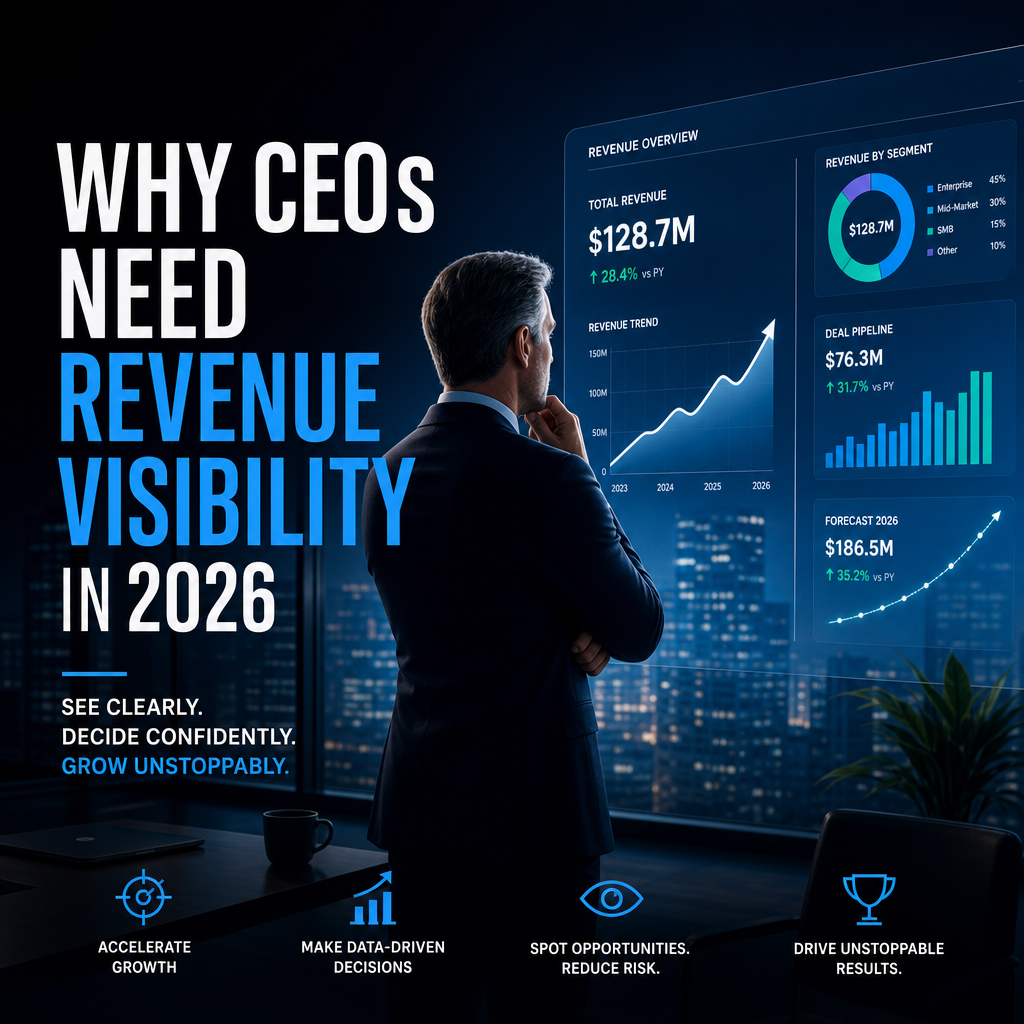
Why CEOs need revenue visibility in 2026 to achieve unstoppable growth cannot be overstated. As the business landscape becomes more complex and competitive, having a clear and precise understanding of revenue streams is essential for making informed strategic decisions. In an era driven by rapid digital transformation, shifting consumer behaviors, and economic uncertainties, CEOs who prioritize revenue visibility will be better positioned to steer their companies toward sustainable success.
The Importance of Revenue Visibility for CEOs in 2026
Revenue visibility refers to the ability of an organization’s leadership to have clear, real-time insights into the sources of income, the health of accounts, and the predictable future earnings of the business. For CEOs, this means access to accurate, timely data about sales funnels, customer trends, subscription renewals, and payment cycles. Why CEOs need revenue visibility in 2026 is because it directly influences their capacity to forecast growth opportunities, avoid financial pitfalls, and allocate resources effectively.
In 2026, businesses face unprecedented levels of uncertainty due to geopolitical shifts, inflation pressures, and evolving market regulations. Without revenue visibility, CEOs risk making decisions based on incomplete or outdated data, leading to missed targets or inefficient spending. Conversely, with total transparency into revenue metrics, CEOs can proactively adjust strategies—whether that means ramping up investment in high-performing segments or addressing underperforming product lines.
Enhanced Decision-Making with Real-Time Revenue Insights
One of the primary reasons why CEOs need revenue visibility in 2026 is the increasing demand for agility in business decisions. In the past, revenue reports were often generated monthly or quarterly, limiting how quickly leadership could respond to changes. Today, companies can leverage advanced analytics and AI-driven tools to monitor revenue progress daily or even hourly.
This real-time insight empowers CEOs to make data-driven decisions faster. For example, if a sudden drop in sales is detected in a key region, the CEO can immediately initiate corrective measures like targeted marketing campaigns or pricing adjustments. Additionally, real-time revenue visibility helps in identifying emerging customer segments or new revenue streams before competitors do.
Driving Investor Confidence and Stakeholder Trust
In 2026, transparency and accountability are more critical than ever for maintaining investor confidence. CEOs who have clear revenue visibility can provide accurate forecasts and demonstrate a strong grip on their company’s financial health. This transparency reduces risks and builds trust with stakeholders such as investors, board members, and partners.
When CEOs can confidently report anticipated revenue growth backed by concrete data, it not only strengthens the company’s valuation but also attracts more investment. Furthermore, transparent revenue reporting helps in maintaining compliance with evolving financial regulations, reducing legal risks associated with misreporting or inaccuracies.
Facilitating Sustainable Growth through Strategic Planning
Why CEOs need revenue visibility in 2026 goes beyond just understanding current earnings. It also involves strategic planning for long-term growth. Visibility into recurring revenue streams, churn rates, and customer lifetime value allows CEOs to develop scalable growth models that are resilient to market fluctuations.
With detailed revenue insights, CEOs can identify areas suitable for expansion, potential partnerships, and product innovation. They can allocate capital to initiatives that promise higher returns and reduce expenditures in weaker areas. This optimized approach leads to improved profitability and market share growth over time.
Integrating Technology for Comprehensive Revenue Visibility
Achieving total revenue visibility requires embracing modern technology solutions. In 2026, CEOs rely heavily on customer relationship management (CRM) platforms, enterprise resource planning (ERP) systems, and artificial intelligence to gather, analyze, and visualize revenue data from multiple business units.
By integrating these technologies, companies can break down data silos and gain a unified view of their revenue streams. Machine learning algorithms can also predict future revenue trends based on historical data and market indicators, enabling CEOs to anticipate changes and prepare accordingly.
Conclusion
Why CEOs need revenue visibility in 2026 is clear: without it, growth potential is limited, risks increase, and decision-making becomes reactive rather than proactive. In a fast-paced, digitally driven economy, CEOs who harness real-time, comprehensive revenue data unlock unstoppable growth for their organizations. By prioritizing revenue visibility, leaders not only ensure financial stability but also create a foundation for innovation, agility, and long-term competitiveness. The business leaders who succeed in 2026 will be those who see their revenue clearly and steer confidently toward the future.