
Telecom Revenue Assurance Challenges: Must-Have Solutions for Best Results
May 15, 2026
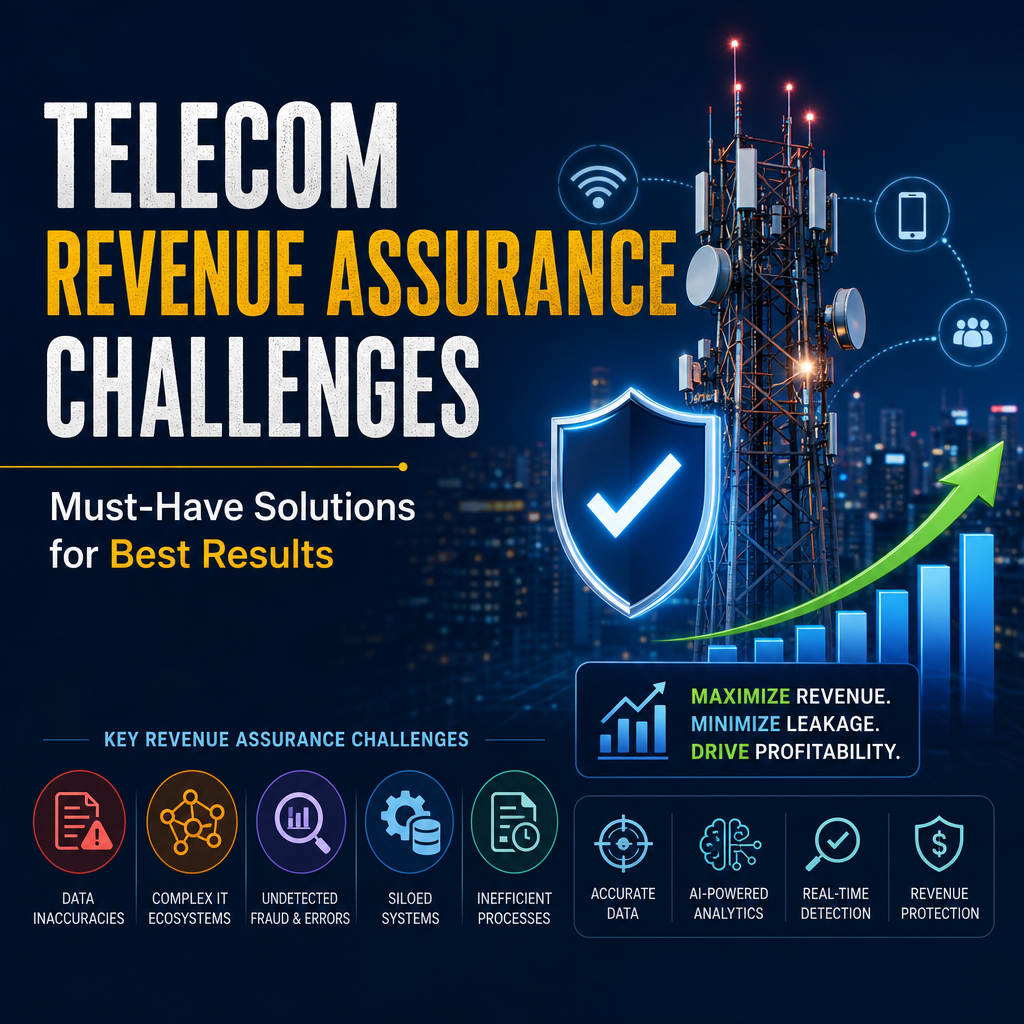
Telecom revenue assurance challenges continue to evolve in complexity as the industry grows and diversifies. For telecom operators, maintaining consistent and accurate revenue streams amidst rapidly changing technology, competitive pricing models, and stringent regulatory requirements is a major concern. Addressing these challenges effectively requires a combination of advanced tools, strategic oversight, and operational discipline. In this article, we will explore some of the key challenges faced in telecom revenue assurance and highlight must-have solutions that enable telecom companies to achieve the best results.
Understanding the Core Telecom Revenue Assurance Challenges
At its foundation, revenue assurance in the telecom sector focuses on identifying and eliminating revenue leakages caused by errors, inefficiencies, or fraud. Some of the most common telecom revenue assurance challenges include:
– Data Inconsistency and Errors: Telecom networks generate enormous volumes of data from billing, customer usage, and network activities. Errors in data capture or processing, such as incorrect tariff application or incomplete usage records, can lead to significant revenue loss.
– Fraud and Revenue Leakage: Fraud activities such as unauthorized access, SIM cloning, or subscription fraud can siphon off revenue. Detecting sophisticated fraud schemes requires robust monitoring and analysis.
– Complex Pricing and Billing Models: Modern telecom services include bundled packages, roaming charges, prepaid and postpaid plans, and discounts/promotions. Accurately tracking the application of these complex pricing models increases the chance of billing errors.
– Regulatory Compliance and Reporting: Regulatory bodies often impose mandatory reporting and compliance standards. Failing to meet these can lead to fines and reputational damage.
– Lack of Real-Time Monitoring: Delays in identifying revenue issues allow them to accumulate and exacerbate losses. Traditional revenue assurance methods may not provide the agility needed for real-time detection.
Must-Have Solutions to Overcome Telecom Revenue Assurance Challenges
1. Advanced Data Analytics and AI-Powered Tools
Implementing sophisticated data analytics platforms is crucial for tackling telecom revenue assurance challenges effectively. These tools aggregate data from multiple sources, cleanse it, and analyze patterns to detect anomalies or inconsistencies. Incorporating artificial intelligence (AI) and machine learning models can improve fraud detection accuracy and predict potential revenue leakages before they become critical. Real-time analytics enable proactive decision-making and faster corrective actions.
2. Integrated Revenue Assurance Platforms
Manual cross-checking of billing and usage data is not scalable in today’s complex environments. Integrated revenue assurance platforms consolidate data from billing systems, network elements, customer management platforms, and finance systems. This holistic view helps identify discrepancies and aligns revenue management processes seamlessly. Automation within these platforms reduces human error, accelerates data reconciliation, and ensures comprehensive coverage.
3. Continuous Auditing and Monitoring
Revenue assurance should not be treated as a periodic task but rather as an ongoing process. Continuous auditing frameworks monitor transactions and operations on a daily or real-time basis, thus minimizing opportunities for leakage. Automated alerts enable immediate investigation of suspicious activities or technical glitches, reducing downtime and revenue impact.
4. Enhanced Fraud Management Systems
Telecom revenue assurance challenges related to fraud necessitate robust fraud management systems. These systems employ behavioral analytics, pattern recognition, and predictive modeling to identify emerging fraud tactics such as subscription fraud, identity theft, or traffic pumping scams. By integrating with customer experience and network security teams, fraud management solutions can provide a coordinated defense.
5. Clear Regulatory Compliance Integration
To avoid regulatory penalties, revenue assurance solutions must embed compliance checks that align with local and international standards. Automated compliance reporting and audit trails simplify regulatory submissions and provide transparency. Adopting platforms that keep pace with regulatory changes ensures ongoing adherence without manual rework.
6. Skilled Workforce and Process Optimization
Technology alone cannot address all telecom revenue assurance challenges. Skilled staff who understand both the technical and business aspects of telecom billing and revenue management are vital. Regular training, clear workflows, and collaboration between departments such as finance, IT, and customer service improve issue resolution and process efficiency.
The Road to Optimal Telecom Revenue Performance
Successfully overcoming telecom revenue assurance challenges requires a comprehensive, multi-layered approach combining technology, processes, and people. Operators that invest in the right mix of data-driven analytics, automation, and continuous monitoring drastically reduce errors and fraud, improving profitability and customer satisfaction. Moreover, adapting to new industry trends—like 5G deployment, IoT services, and cloud-based billing systems—calls for scalable and flexible revenue assurance strategies.
In summary, addressing these challenges with the must-have solutions discussed not only maximizes revenue capture but also strengthens overall operational resilience. For telecom companies aiming to stay competitive and financially healthy in today’s dynamic market, prioritizing effective revenue assurance is indispensable.