
Why Real-Time Intelligence Beats Manual Audits: Stunning Efficiency Benefits
May 15, 2026
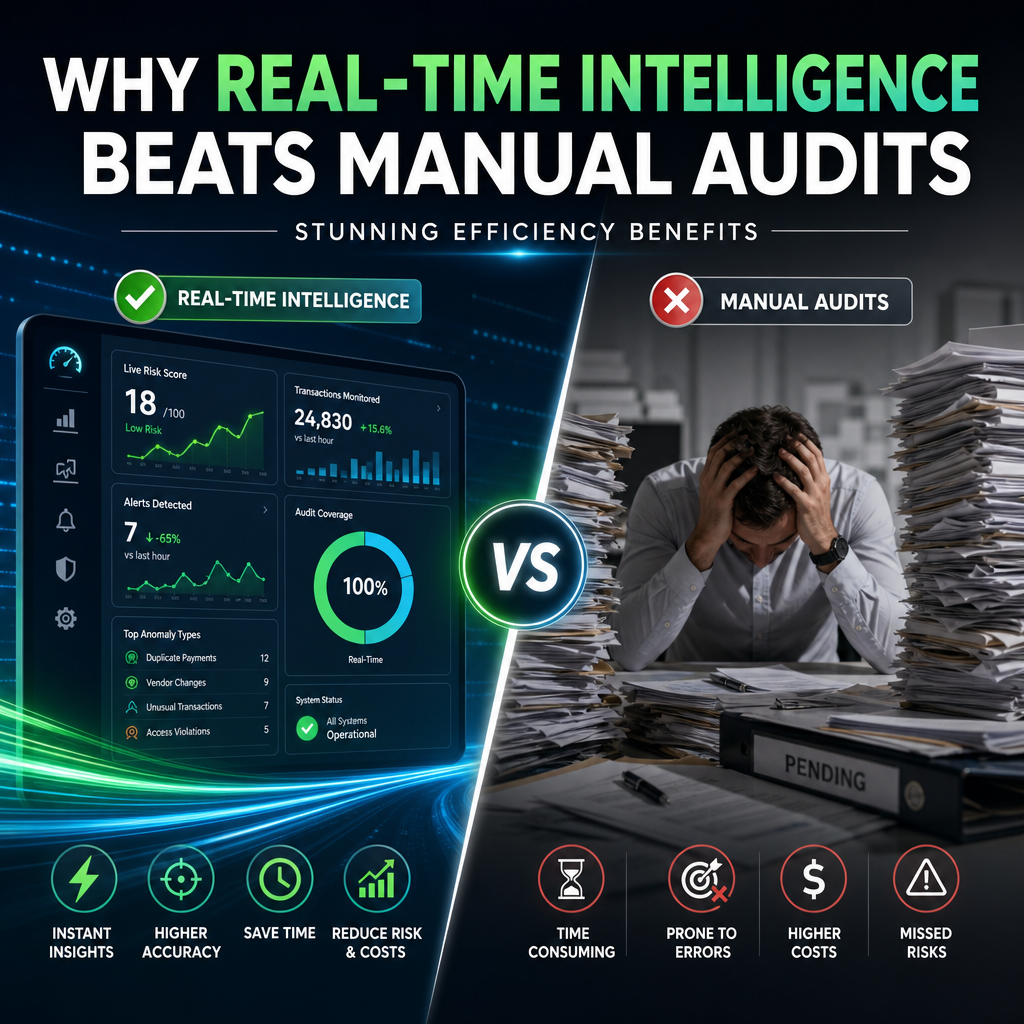
Why real-time intelligence beats manual audits is a question that businesses and organizations increasingly ask as they strive to enhance efficiency and accuracy. Traditional manual audits, though thorough, can be time-consuming, prone to human error, and lag behind the pace of modern business operations. Real-time intelligence, powered by advanced technologies and analytics, offers a compelling alternative that transforms how audits are conducted, delivering stunning efficiency benefits that are hard to ignore.
The Limitations of Manual Audits
Manual audits typically involve a labor-intensive process where auditors collect, review, and analyze data after events have occurred. This retrospective approach presents several challenges:
– Time-Consuming Processes: Gathering and verifying data manually can take days or even weeks, creating delays in decision-making.
– Human Error: The reliance on manual inputs increases the likelihood of mistakes, such as miscalculations or overlooked discrepancies.
– Reduced Responsiveness: Since audits are performed after the fact, any issues discovered may have already caused damage or losses.
– High Costs: The extensive manpower and resources required for manual audits can become expensive, especially for larger organizations.
These constraints demonstrate why many companies are pivoting toward real-time intelligence solutions.
Understanding Real-Time Intelligence and Its Advantages
Real-time intelligence refers to the continuous collection, analysis, and reporting of data as events unfold. This approach leverages tools such as artificial intelligence, machine learning, and automated data capture to provide instant visibility into operations.
Some of the core advantages of real-time intelligence include:
– Immediate Detection of Anomalies: Businesses can spot irregular patterns or potential fraud as soon as they occur, allowing for swift corrective action.
– Enhanced Data Accuracy: Automated systems reduce the risk of errors inherent in manual data handling.
– Faster Reporting: Instant analytics enable stakeholders to receive up-to-date insights without waiting for lengthy audit cycles.
– Improved Resource Allocation: By automating routine checks, staff can focus on complex analysis and strategic planning.
Why Real-Time Intelligence Beats Manual Audits in Efficiency
There are several reasons why real-time intelligence provides a more efficient alternative to traditional auditing methods:
1. Continuous Monitoring vs. Periodic Reviews
Manual audits often happen quarterly, annually, or when specific triggers arise. Real-time intelligence enables continuous monitoring by automatically collecting and analyzing data as it is generated. This constant vigilance ensures that potential issues are detected far earlier, reducing risk exposure and minimizing losses.
2. Automation of Routine Tasks
Tasks such as data validation, compliance checks, and transaction reconciliations can be automated within real-time systems. This frees auditors from repetitive work and accelerates the overall audit timeline.
3. Scalability and Speed
As businesses grow, the volume of data requiring examination skyrockets. Manual methods struggle to keep pace, but real-time intelligence platforms can scale effortlessly by processing large datasets quickly, providing instant insights regardless of company size.
4. Enhanced Decision-Making
Real-time insights empower management to make informed decisions swiftly, addressing issues proactively rather than reacting to problems uncovered during a delayed audit. This proactive approach leads to better overall governance and operational performance.
Practical Applications Across Industries
Various sectors benefit significantly from the efficiency gains of real-time intelligence in auditing:
– Financial Services: Instant fraud detection safeguards assets and protects customers.
– Manufacturing: Real-time quality control audits prevent defects and reduce waste.
– Retail: Continuous inventory audits optimize stock levels and minimize shrinkage.
– Healthcare: Compliance monitoring ensures patient data security while reducing regulatory penalties.
These examples illustrate how real-time intelligence transforms auditing from a burdensome task to a strategic asset.
Challenges and Considerations
While real-time intelligence offers numerous benefits, organizations must consider factors such as data privacy, system integration, and the initial investment required to implement advanced audit technologies. Successful adoption depends on a clear strategy, robust infrastructure, and staff training to leverage new tools effectively.
Conclusion
Why real-time intelligence beats manual audits primarily boils down to unparalleled efficiency and accuracy. By enabling continuous monitoring, automating routine tasks, and delivering instant insights, real-time intelligence reshapes auditing into a dynamic, proactive process. Organizations embracing this shift not only enhance their operational effectiveness but also position themselves to respond faster to risks, seize opportunities, and improve overall governance in an increasingly data-driven world.